













No items in cart
Currently you don't have any items added to your cart. Select some items then come back here to complete your purchase.
Go to shop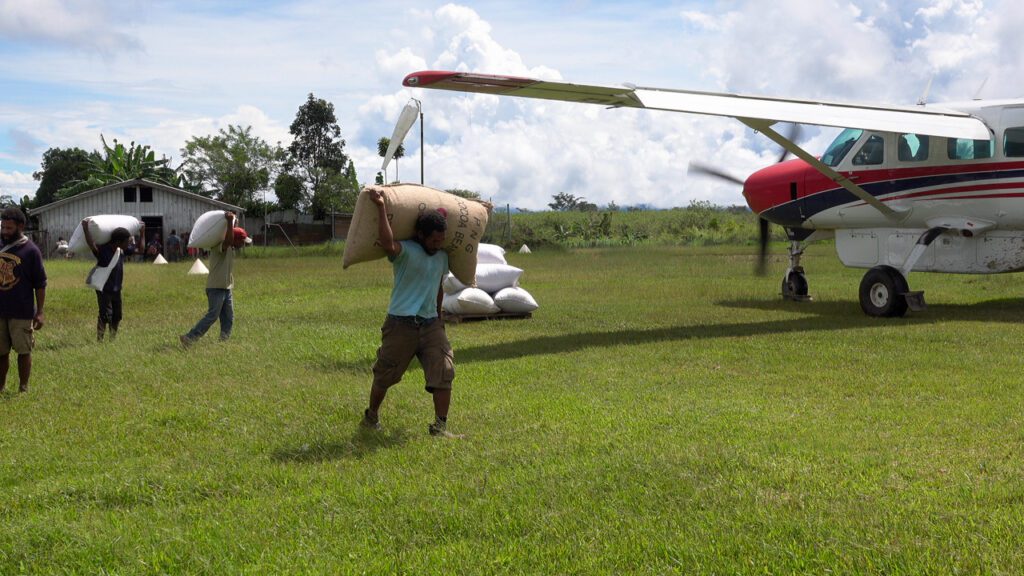
MAF flights have boosted farmers’ incomes in PNG’s Karimui District (credit: Aquila Matit)
Reporting by Aquila Matit, Matt Painter, Kowara Bell and Tajs Jespersen
Coffee and cacao are Papua New Guinea’s main cash crops, which employ half the country’s workforce (source: UN/IFAD). But in PNG’s most isolated areas with no roads, how do farmers get their harvest to market?
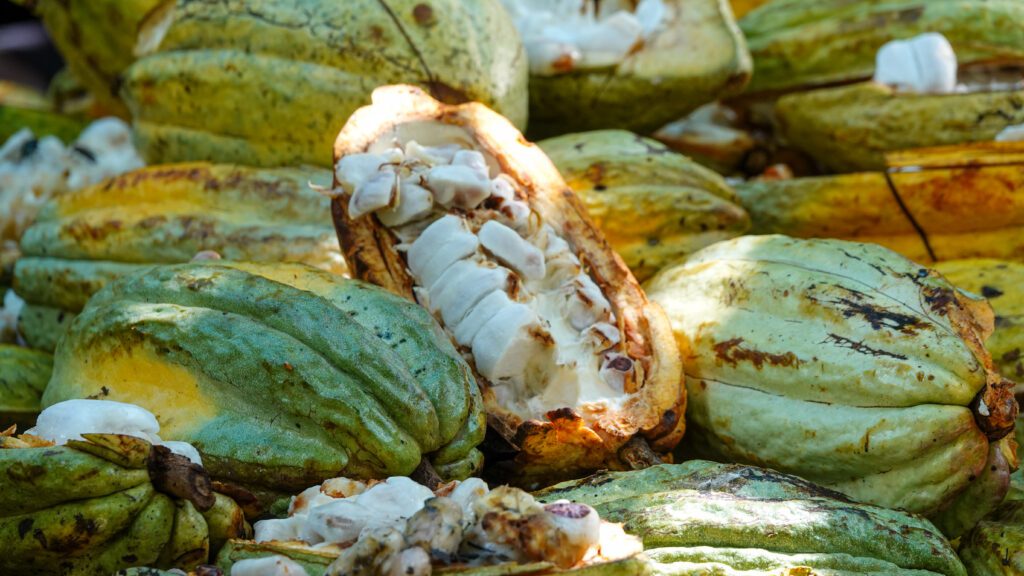
Cacao is one of PNG’s biggest cash crops (credit: Aquila Matit)
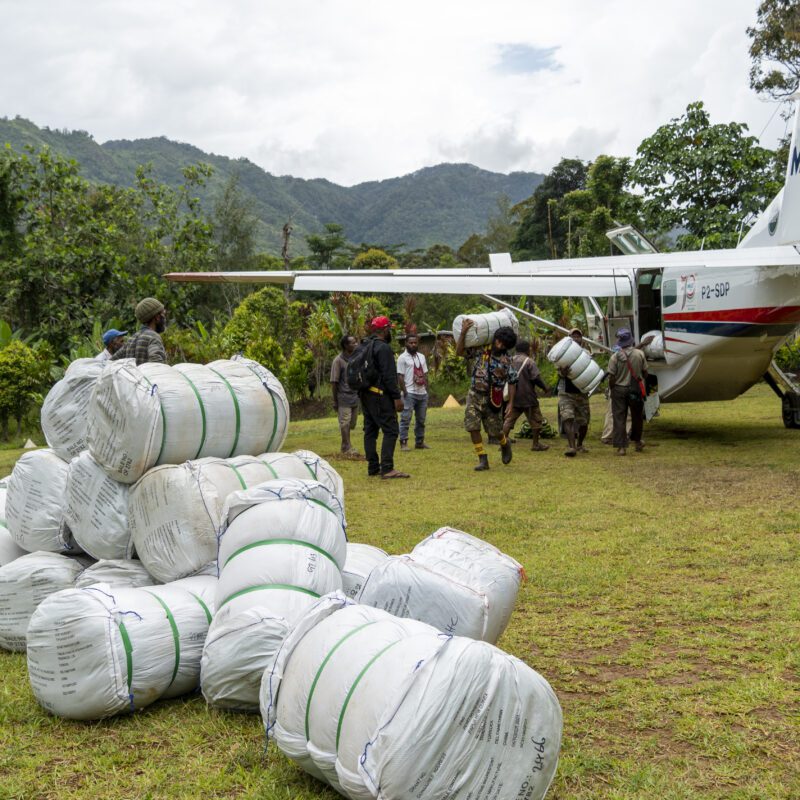
In remote Karimui District in the Eastern Highlands, farmers rely on MAF to swiftly deliver sacks of cacao beans to the provincial capital of Goroka where they are either sold or transported further afield to other buyers.
Without this initial 30-minute flight, it would take three days to reach Goroka alone!
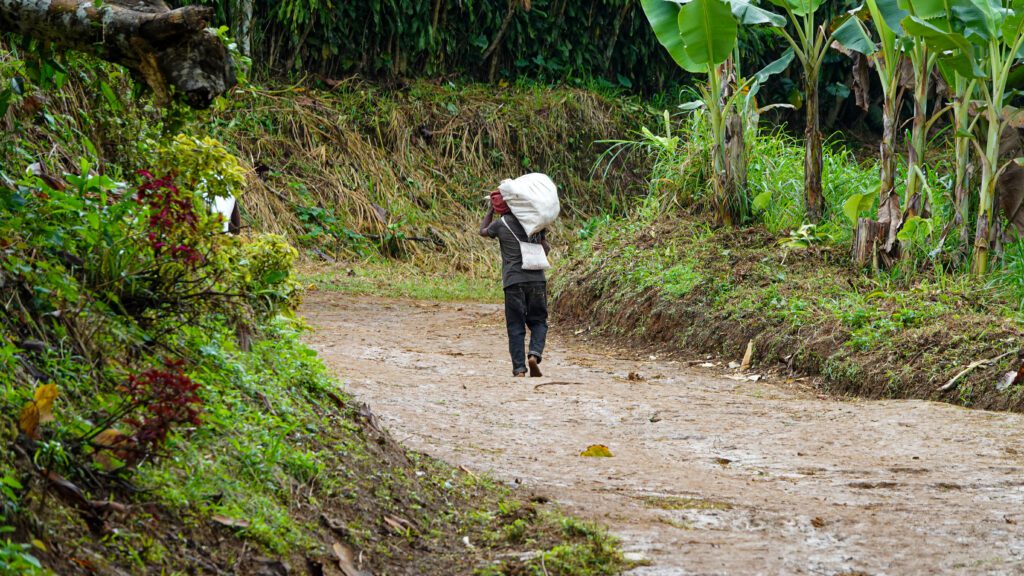
Without MAF, farmers carry produce for 2 days to reach the road (credit: Aquila Matit)
Firstly, farmers would need to hike for two days through mountainous terrain in the heat, carrying almost their own bodyweight in beans, before reaching a road to pick up a truck. Each sack weighs up to 65kgs. According to the NHS, a 5’7” male weighs an average of 66.1kgs.
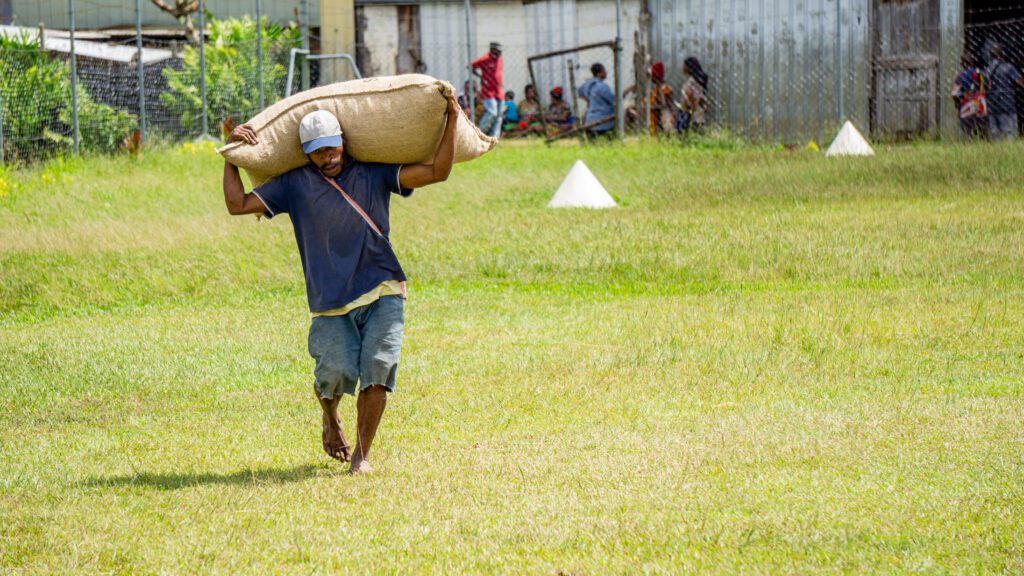
Each sack weighs up to 65kgs – nearly the weight of an average man (credit: Matt Painter)
Then it’s a day’s drive on pothole-ridden roads to get to Goroka.
Apart from trying to catch a lift in the region’s one and only car, MAF is the only feasible means of transport out of Karimui.
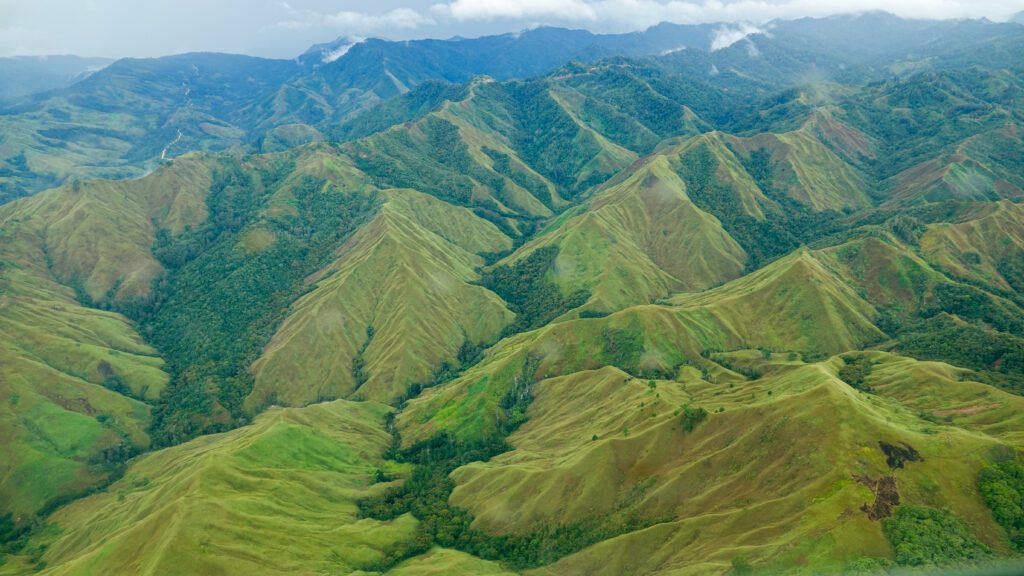
The terrain between Karimui and Goroka is mountainous (credit: Aquila Matit)
Every day across PNG, cash crops from over 30 remote villages are loaded onto MAF planes and flown to market. This income funds life’s essentials for thousands of farmers and their families, which is transforming rural communities.
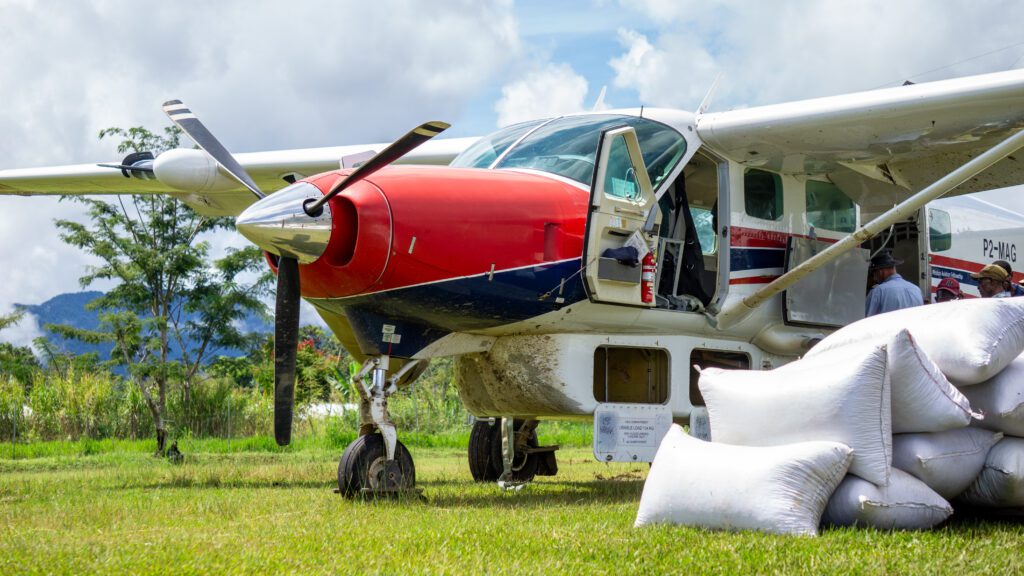
Every day in PNG, MAF does 1 or 2 flights carrying cash crops (credit: Matt Painter)
Award winning Norman Mondo is based in Sorita, Karimui District, and is one of PNG’s leading cacao producers in the country.
After inheriting land from his father, Norman began cacao farming in 2014 and has ‘never looked back’.
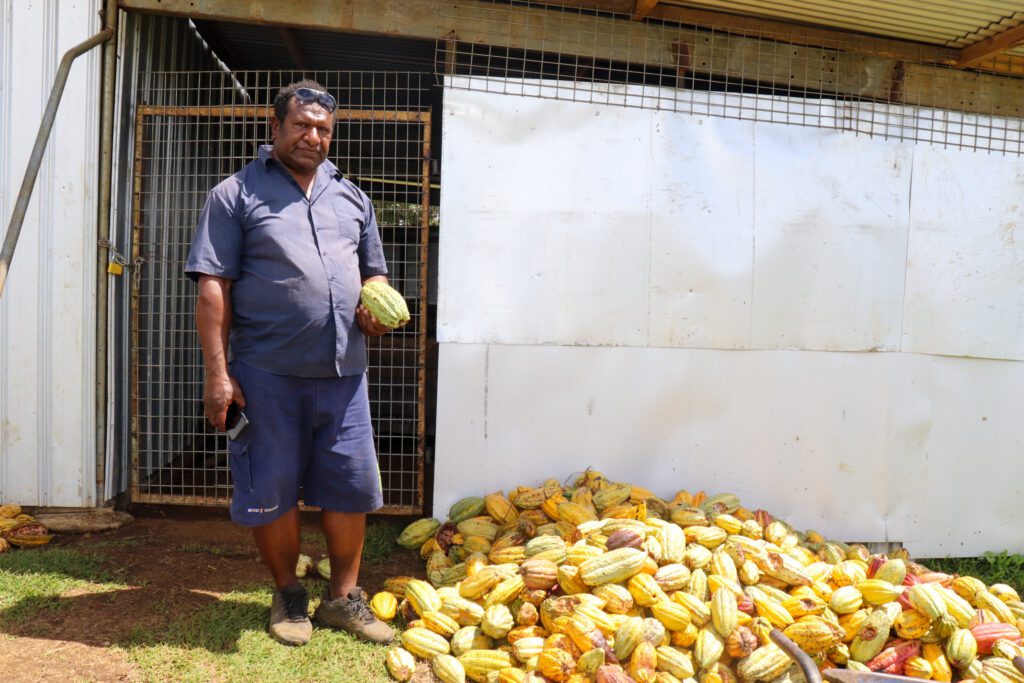
Norman Mondo is an award-winning cacao producer based in Sorita (credit: Kowara Bell)
In 2019, he won first prize in PNG’s Cacao of Excellence Competition and was invited to the Salon du Chocolat in Paris – the world’s biggest annual chocolate exhibition.
MAF flies Norman’s beans to Goroka, which are then trucked further afield to Lae – PNG’s second largest city – where they are finally sold.
Norman’s thriving business has paid for one child to train as an engineer and another as a pilot. MAF is an integral part of Norman’s success story.
‘Karimui has no road link. We fly on the plane to Goroka, which is too far and not suitable to carry heavy loads of dried cacao beans.
‘It’s through the plane that we access everything – our buying and selling is through the plane alone. When the load is ready, MAF comes in and takes it to market. MAF provides a good service in this remote area where we are.
‘I normally send 63kg bags of cacao. Money from cacao has paid for all my children’s education and it pays for various goods. We are happy!’
Norman Mondo, award winning cacao producer based in Sorita, Karimui District
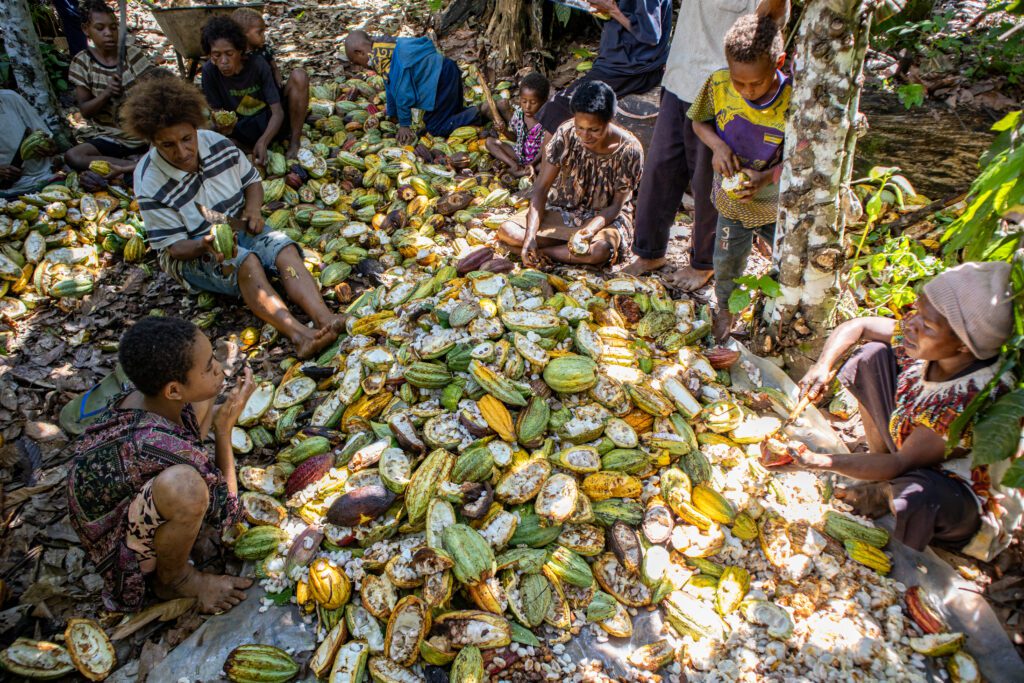
Norman needs workers to harvest and process cacao (credit: Matt Painter)
Norman’s business doesn’t just benefit his household. His vast plantation needs workers – Misis, a mother of four, is one of them.
Her job involves picking cacao pods, extracting the wet beans, and drying them out before they are transported to market.
For every kilogram of wet beans she gathers, Misis is paid 1 Kina. Her total earnings from the plantation are enough to meet her basic needs, she says.
‘When the beans are ready, they are flown by plane to Goroka, and from there, transported to Lae city for sale. Norman receives the money, returns, and pays us farm workers.
‘I may only pick a small amount, but when the quantity increases, I earn more. I buy oil, salt and soap with what I earn. The rest I save for my children’s school clothes and other needs. We can live.’
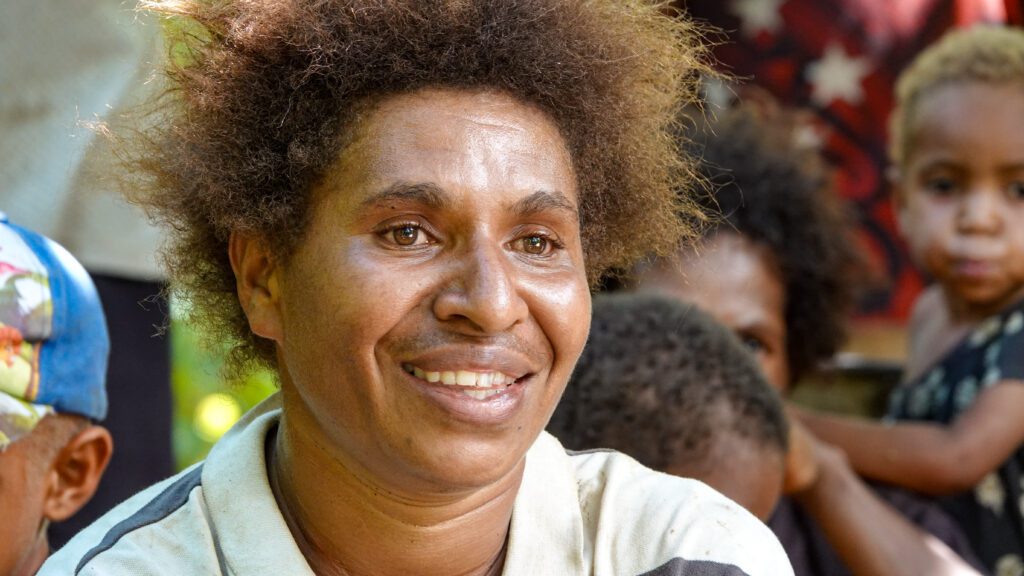
Misis loves working for Norman (credit: Aquila Matit)
But for Misis, it’s not just about the money.
‘Norman funds God’s mission, supports people, and helps those in need. Those of us who support Norman are also blessed.
‘Whatever he gives, we receive with thanks. We support Norman because we know he is supporting the mission of Christ. That’s why we help – we are seeing change both spiritually and physically.’
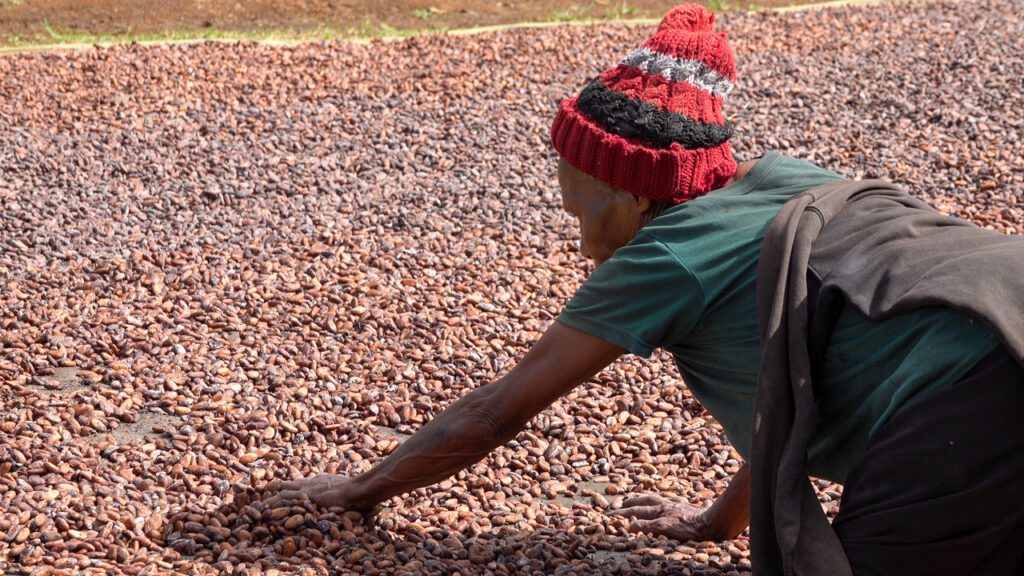
A fellow worker dries out beans before they’re transported to market (credit: Aquila Matit)
Norman’s success is also funding community development. His thriving cacao business became the catalyst for something much bigger – the construction of a brand-new airstrip, which opened in May 2025.
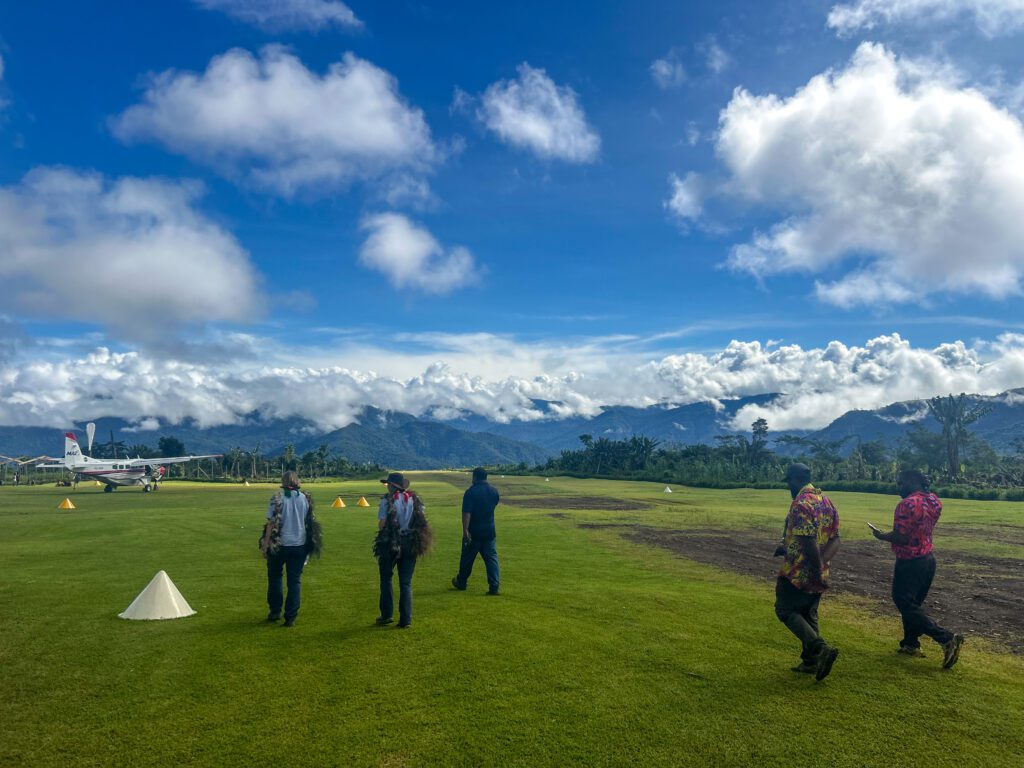
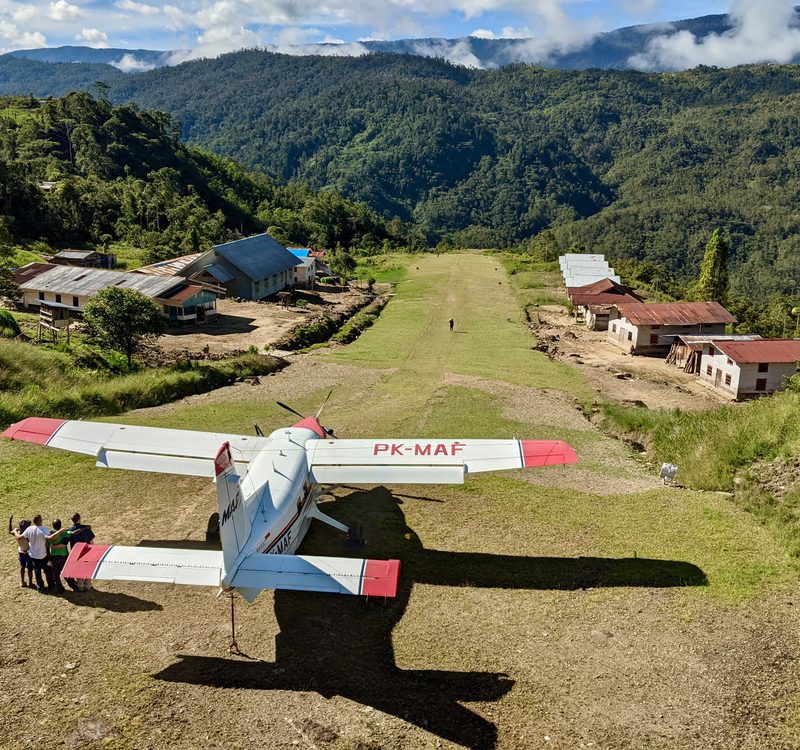
Norman helped fund Sorita Airstrip next to his plantation (credit: Alisha Rowley)
Sorita Airstrip backs onto Norman’s cacao plantation. Before it was built, he used to drive sacks of beans to Karimui Airstrip about a kilometre away from his plantation. But procuring the region’s one and only vehicle and navigating dirt tracks was a struggle.
Another issue was high passenger demand at Karimui Airstrip. Consequently, their produce didn’t always make it onto flights, so sometimes their cacao beans would be left behind and spoil.
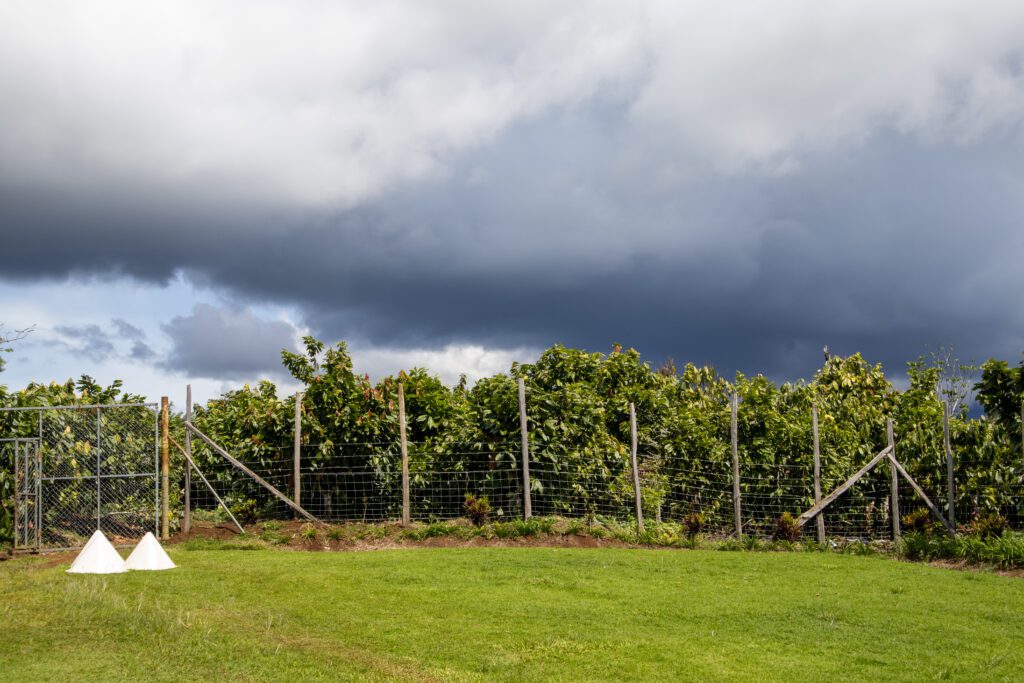
The new airstrip’s location saves a lot of time & effort (credit: Matt Painter)
But now that MAF planes land at Sorita Airstrip and take the cacao directly to Goroka, it’s made life much easier, says Norman.
‘It wasn’t wise or sustainable to bring heavy loads over such a long distance (to Karimui Airstrip). The labour was too much, so we used cacao money to build this airstrip, which will help local cacao farmers transport our beans to market. More cacao bags taken to market mean more income for the people.
‘So we as a community, have invested back into our community for our future. This new airstrip will also help surrounding communities with the great volume of cacao that is sold. We are so happy to work with MAF!’
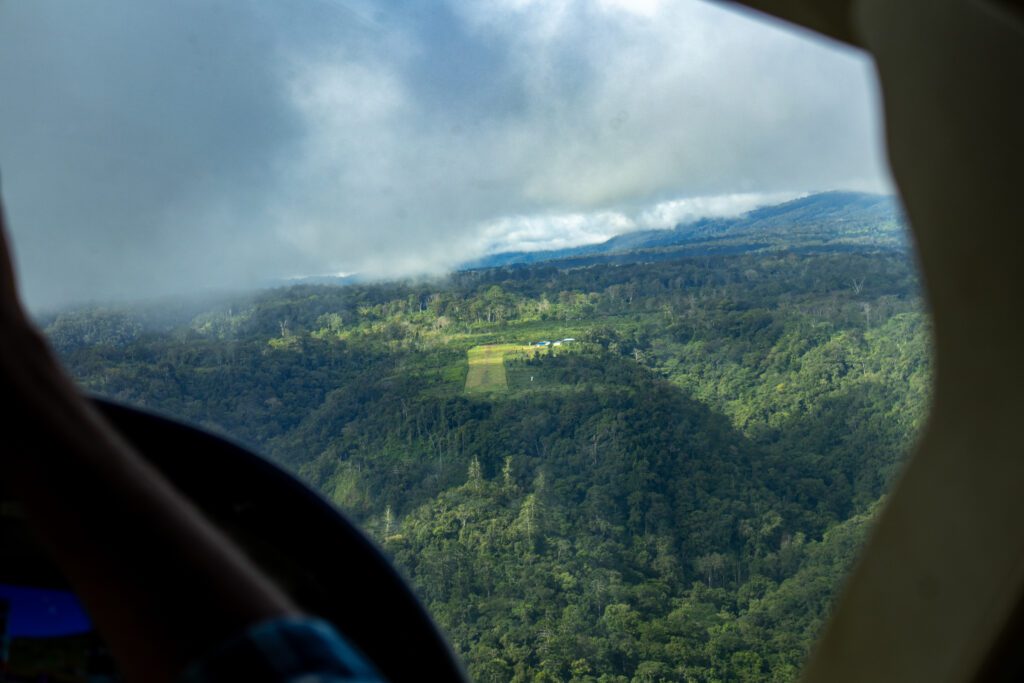
Coming into land at Sorita Airstrip (credit: Matt Painter)
But development doesn’t stop there. Beside Sorita Airstrip, Norman has also constructed a health centre and built churches in the area.
‘I’ve built four churches in different communities, constructed houses for pastors, and flown in laymen to serve in those areas.
‘This area has been neglected for too long. Everyone should have a house with an iron roof; everyone should have a good life; sleep well; have good health; eat well; have access to daily flights and the market, and live well. That’s my philosophy.’
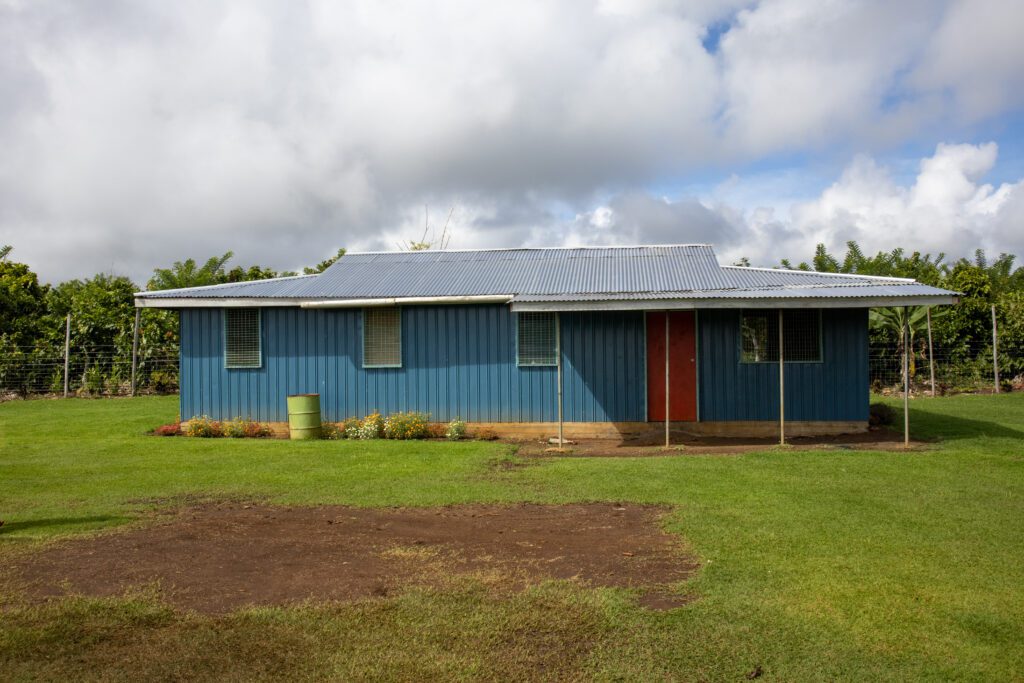
Norman built a health centre for his people with profits from cacao (credit: Matt Painter)
When Sorita Airstrip finally opened, Misis was overcome with emotion.
‘When we saw the plane circling the airstrip, we couldn’t shout or cheer, we were just overwhelmed. Tears filled our eyes.
‘This place used to be thick jungle, but God cleared the way and now we have our own airstrip. We saw it with our own eyes – a plane coming to land for the first time in this community.’
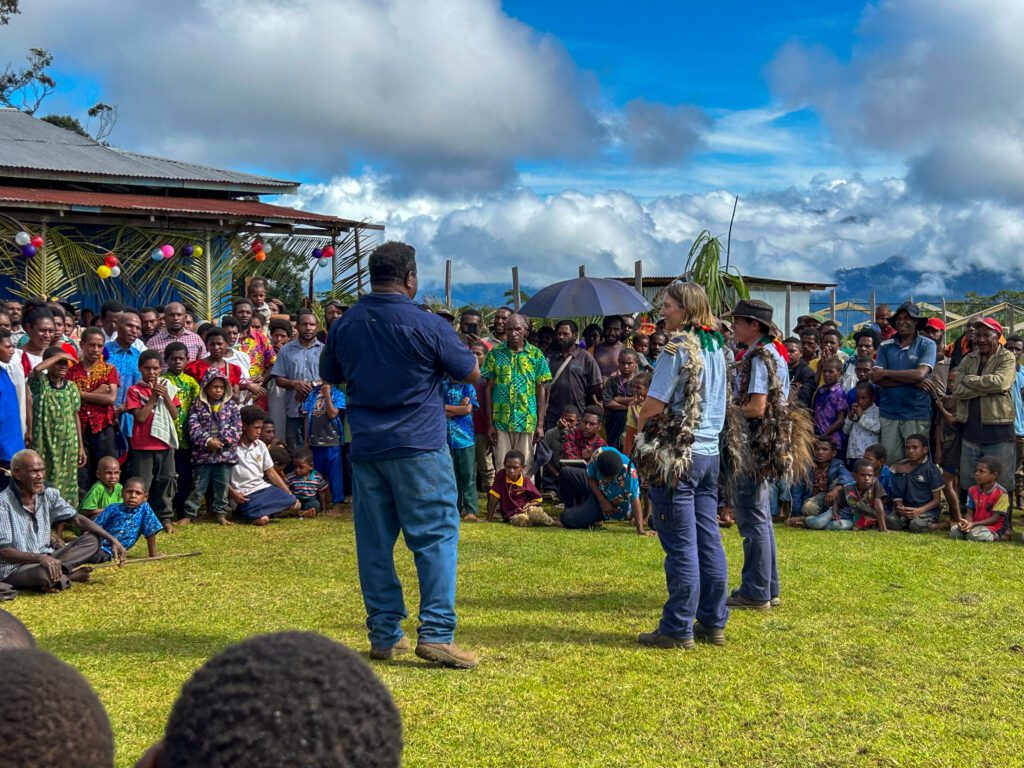
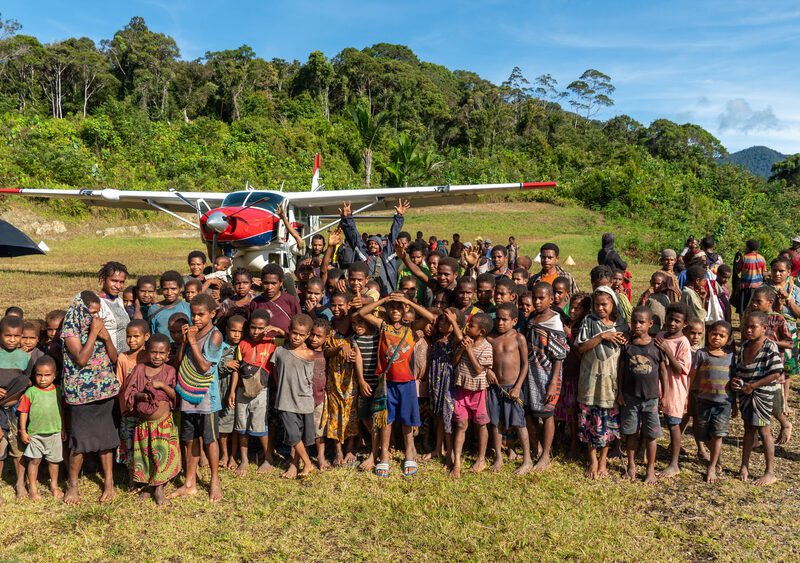
The community celebrate the opening of Sorita Airstrip (credit: Alisha Rowley)
With MAF planes now able to land at Sorita to transport produce directly to Goroka and beyond, the future looks bright for this community, no longer cut off from the outside world.
Your generous support will keep MAF flying cacao to market so that the people of Sorita will thrive, not just survive.
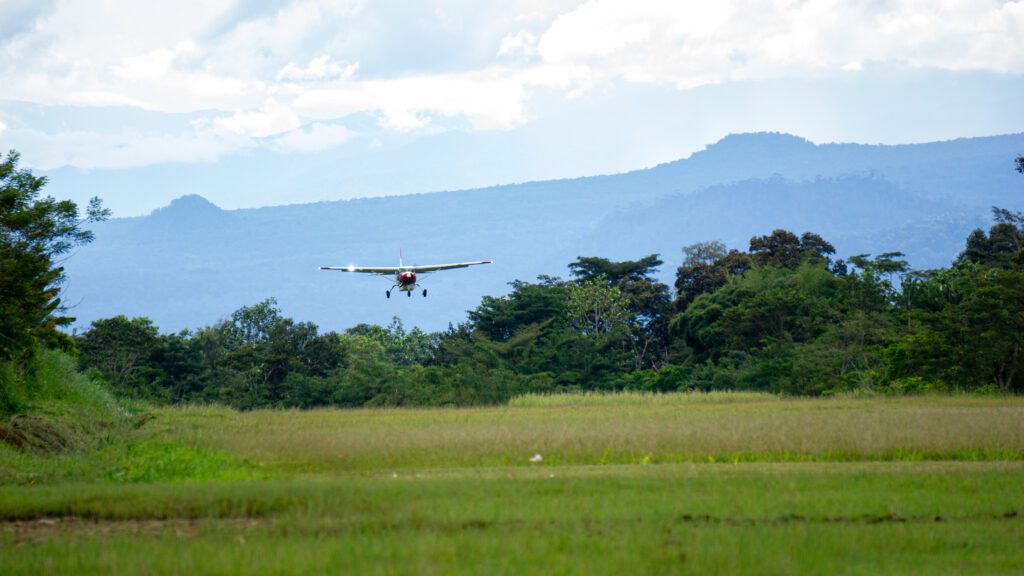
Your support will keep MAF planes flying to and from Sorita (credit: Matt Painter)
Mission Aviation Fellowship (MAF) is the world’s largest humanitarian air operator. For over 80 years we have been flying light aircraft over jungles, mountains, swamps and deserts. We enable more than 1,500 aid, development and mission organisations to bring medical care, emergency relief and long-term development. Our pilots and personnel deliver relief workers, doctors, pastors, school books, food, medicines - everything that can only be safely and speedily delivered by air. Our faithful supporters give and pray to make this all possible.
© 2026 / MAF UK is a registered charity in England and Wales (1064598) and Scotland (SC039107)
