















No items in cart
Currently you don't have any items added to your cart. Select some items then come back here to complete your purchase.
Go to shop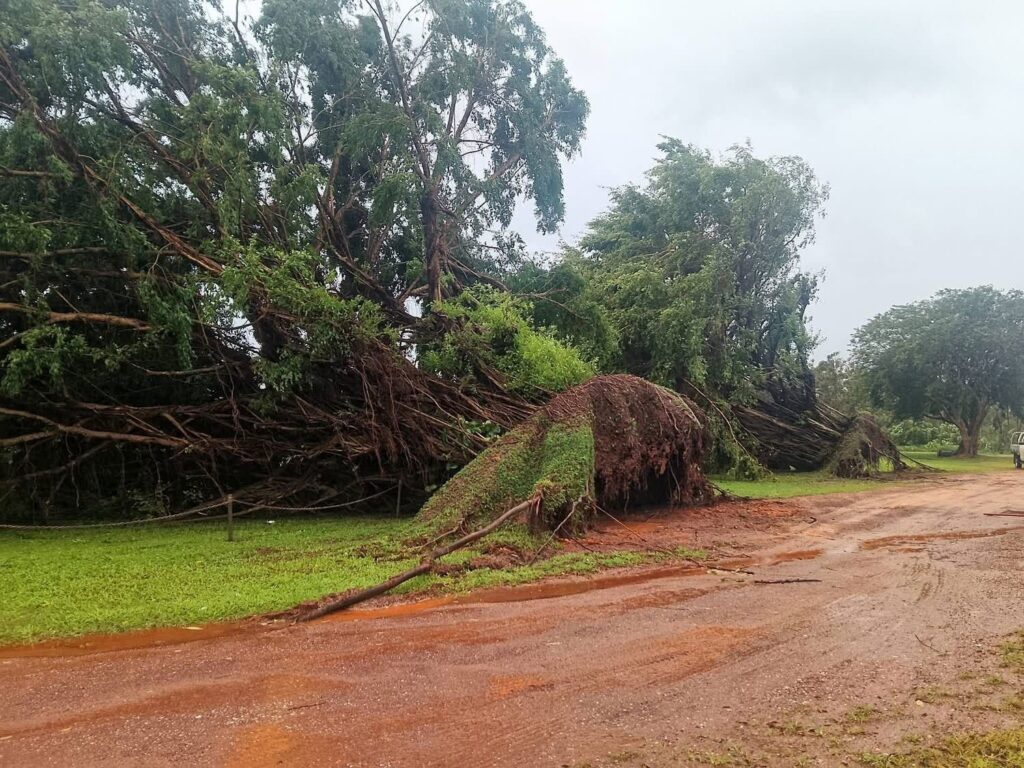
Trees are uprooted by Cyclone Narelle in Arnhem Land (credit: James Gullett)
Before Cyclone Narelle even arrived, northern Australia was already waterlogged from relentless rain, which caused flooding and widespread property damage across the region. Arnhem Land’s wet season typically lasts from November to April.
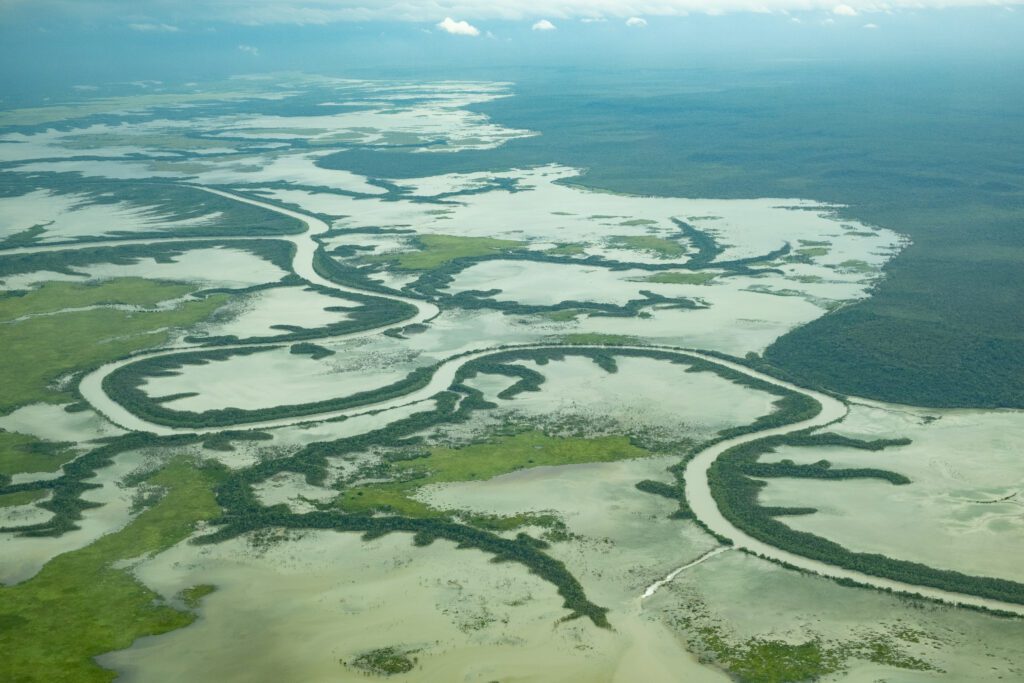
Northern Australia was already waterlogged before Narelle hit (credit: Janne Rytkonen)
At its most powerful, Cyclone Narelle reached ‘Category 5’ – the top of the cyclone scale with gusts of up to 185 miles per hour.
Thanks to advance warnings from Australia’s Bureau of Meteorology, MAF was able to spend two days evacuating more than 70 Yolngu people from four homelands across Arnhem Land including Gan Gan.
On 20 March, residents were flown to the cyclone shelters of Nhulunbuy and Yirrkala on the east coast of Arnhem Land for safety.
Afterwards, all of MAF’s aircraft were secured in the hangar at Gove Airport, waiting for Narrelle to pass overnight.
The town of Nhulunbuy was battered by destructive winds and driving rain, which pulled down trees and caused costly damage to several Arnhem Land tour operators.
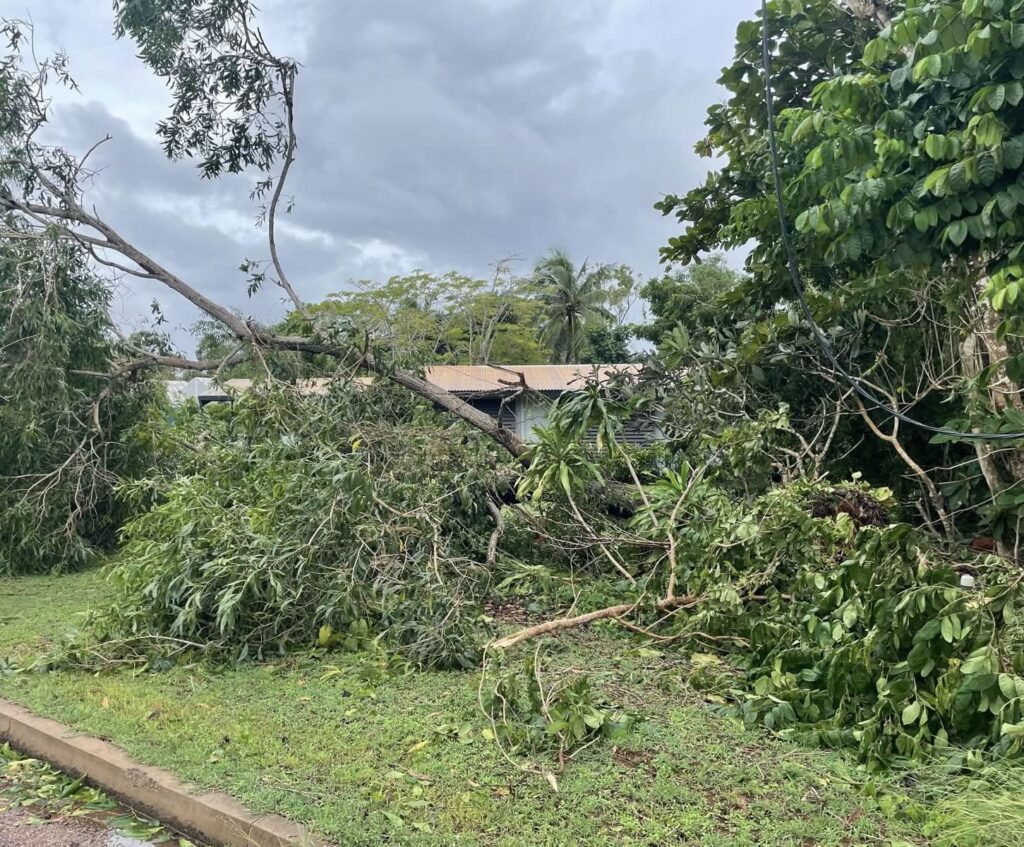
An uprooted tree fell on one of MAF’s staff houses (credit: James Gullett)
Fortunately, following welfare checks, there were no reports of serious injury or loss of life across Arnhem Land.
MAF pilot Tim Vallance-Webb who serves in Arnhem Land takes up the story:
‘Even though we were 375 miles south of the storm eye, there was damage resulting from the cyclone storm surge along the coastline near us. Thankfully there has been no reported loss of life.
‘In addition to the damage and destruction that this severe weather can bring, it increases the isolation of already difficult to access homelands. The limited dirt roads can be washed away or blocked by fallen trees and river crossings become impassible.’
Tim Vallance-Webb – MAF pilot in Arnhem Land
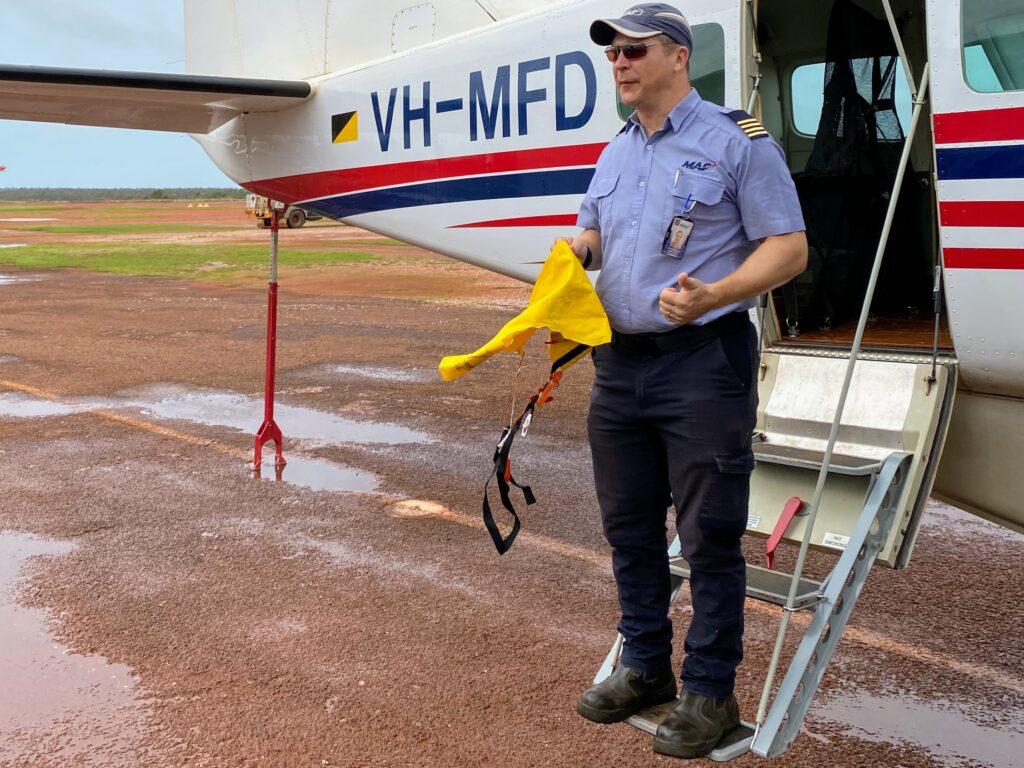
Tim: ‘Thankfully, there has been no reported loss of life’ (credit: Anglicare NT)
Once repairs were carried out on damaged infrastructure, MAF safely repatriated communities back to the Laynhapuy Homelands, but food security for the Yolngu people was becoming an issue.
When dirt tracks are washed away or blocked by fallen trees, communities are cut off from everyday goods and services like buying food for their families or filling their cars with fuel.
When disaster strikes, MAF provides vital access.
In the weeks after Cyclone Narelle hit, several homelands ran out of food.
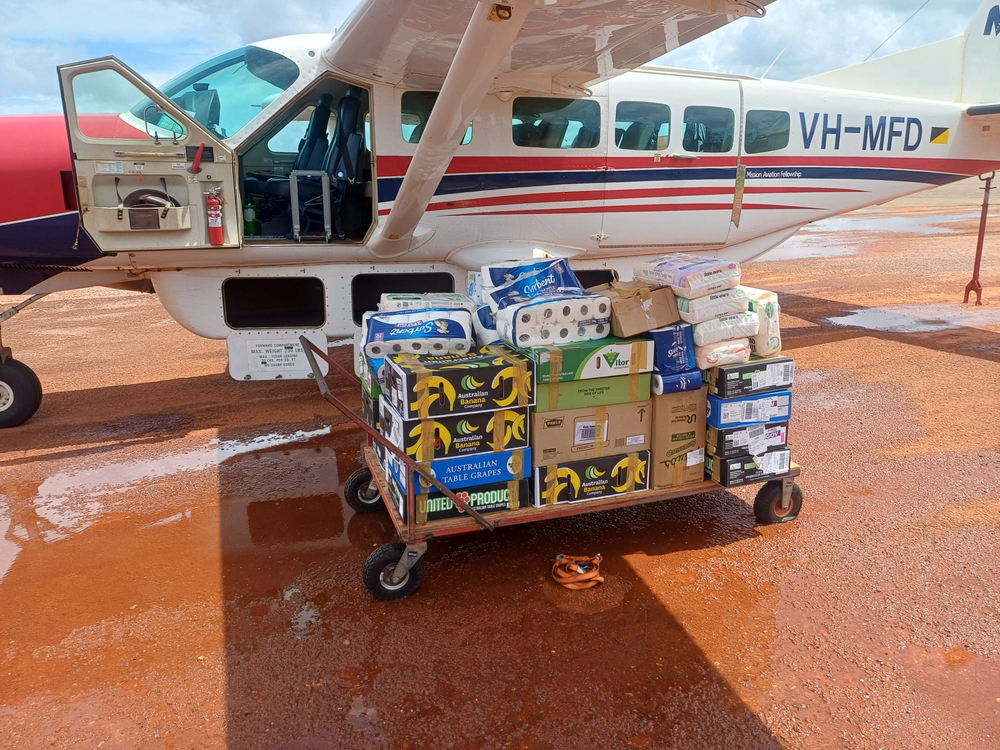
Essential supplies flown in by MAF include fruit & toilet rolls (credit: Rhett Griffiths)
From 6 April – In partnership with Laynhapuy Homelands Aboriginal Corporation (LHAC) – MAF delivered 1.7 tonnes of food and essential supplies to the four worst affected communities using five aircraft over three days.
Baniyala received 627 kg of food aid and Gan Gan received 409 kg. LHAC’s Health Manager, Ashleigh Ayres, explains:
‘We coordinated and funded free food drops to Baniyala, Garrthalala, Wandawuy, Gurrumurru, Gan Gan and Dhalinybuy in the wake of Cyclone Narelle, which made the roads too wet to drive.
‘MAF flew the food out to these homelands over the last couple of weeks and helped distribute it on the ground.’
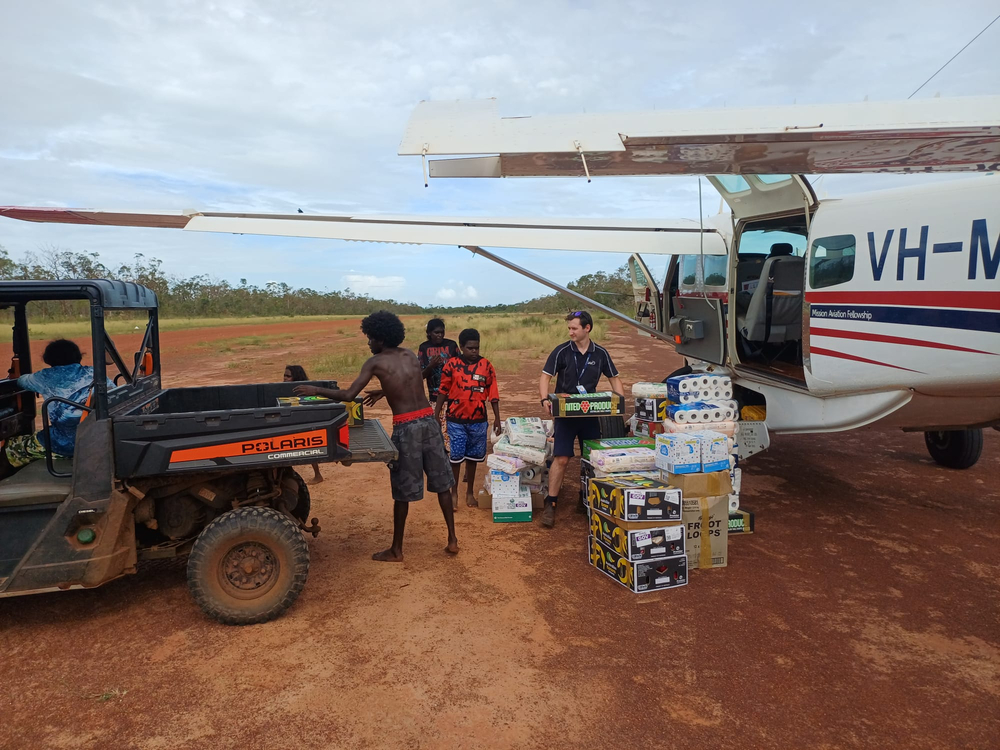
Locals help unload supplies from MAF aircraft in Gan Gan (credit: Ethan McMaster)
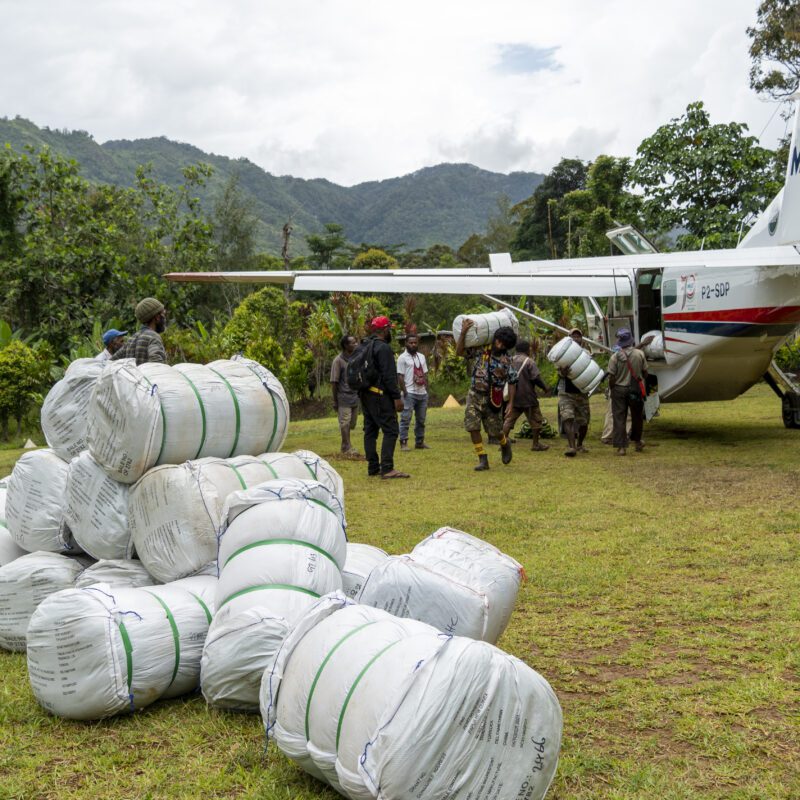
After landing, grateful homeland residents helped unload supplies from the aircraft.
Even during Arnhem Land’s dry season (May to October) when dirt tracks are passable, it would take the Yolngu up to five hours by vehicle to reach town or connect with essential services.
MAF flights are therefore a lifeline all year round.
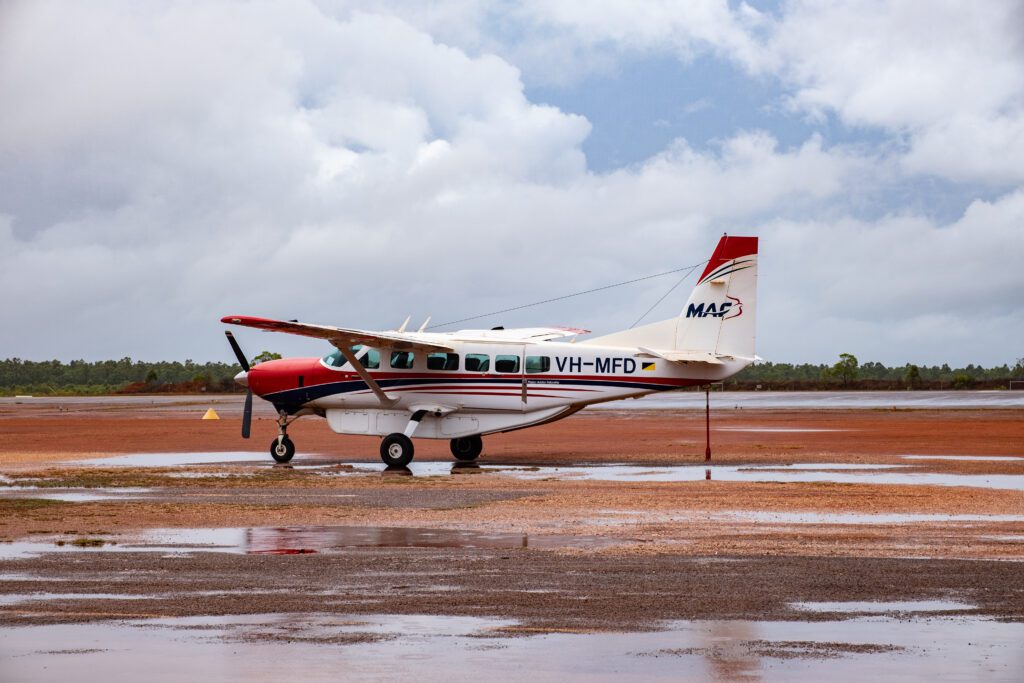
During the wet season, MAF flights are even more critical (credit: Janne Rytkonen)
Given Arnhem Land’s brutal weather conditions during its six-month rainy season, it’s imperative that bush airstrips are continuously well-maintained.

MAF pilot Ethan McMaster looks out onto a drenched Gove Airport (credit: Joshua Oliver)
If left unattended, heavy rainfall would wash away gravel airstrips or create deep grooves in the runways, making it dangerous for MAF’s aircraft to land, further isolating homeland communities.
Gutjangan Homeland is a small Yolngu community located on Bremer Island off the north coast of Arnhem Land. A damaged airstrip would mean dangerously cutting them off from the mainland.
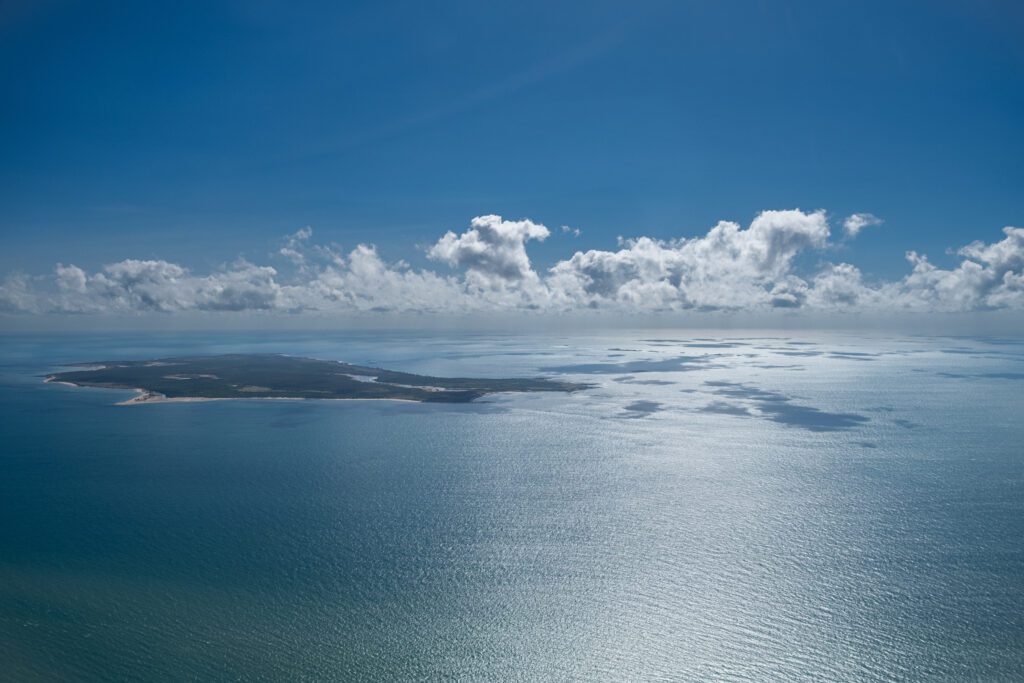
In bad weather, Bremer Island would be cut off without MAF (credit: Janne Rytkonen)
The community relies on people like Michael Geary – an engineer from Laynhapuy Homelands Operations – to keep their airstrip in tip top condition, so that MAF can land there and connect them to the outside world. Michael explains the enormity of his work:
‘We’ve got water washouts (dents) going across the airstrip from our wet season, which I’m just repairing for the pilots, so that they are able to land in the community and take people out if there’s an emergency.’
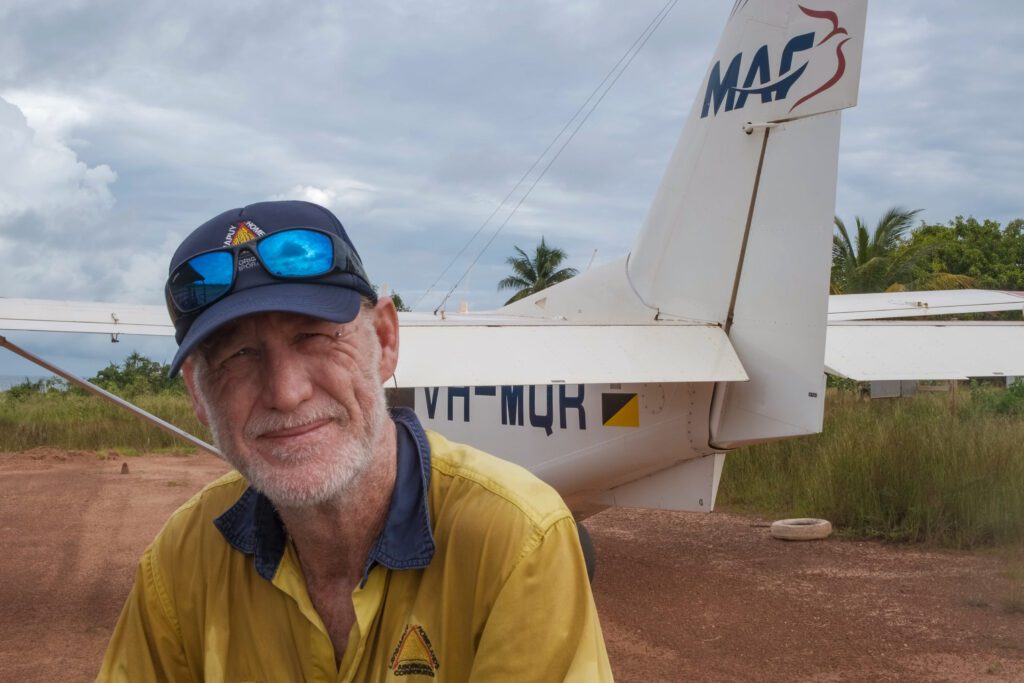
Michael Geary repairs dents in bush airstrips across Arnhem Land (credit: Janne Rytkonen)
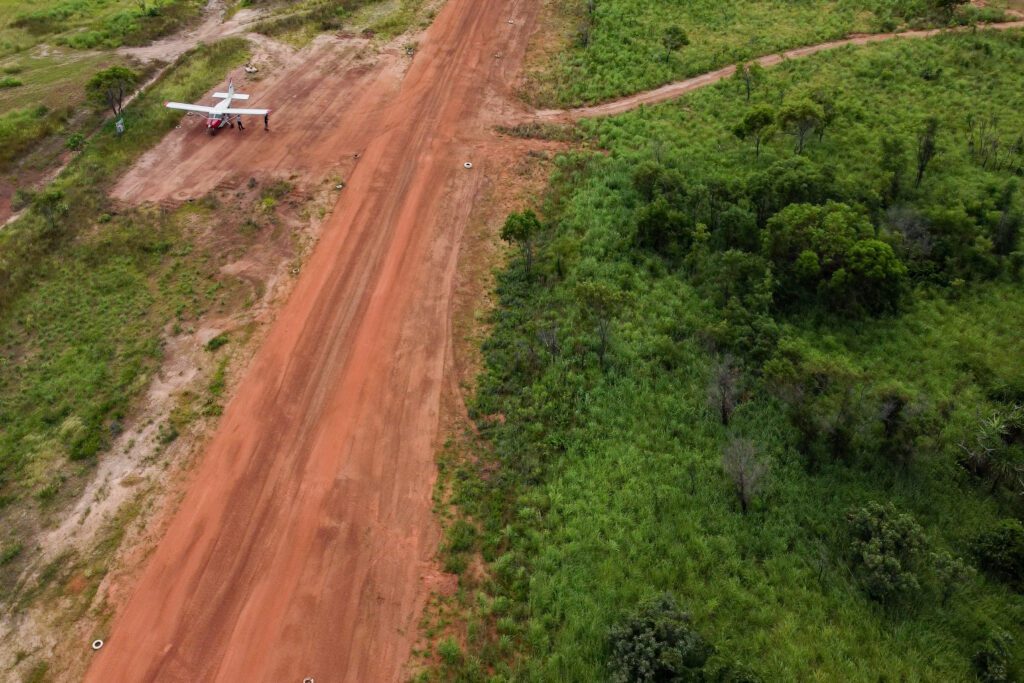
Michael fills in airstrip dents with an excavator (credit: Janne Rytkonen)
Two weeks earlier, Michael had taken an excavator to Bremer Island by barge to fill in the larger holes, but to complete the drainage works, he flew with MAF, says Michael:
‘I’m back here to try and get a bit of drainage work done to get us through the wet season. Our work is pretty important, because it’s basic daily infrastructure that people use.
‘Aviation allows us to get to some places that we can’t get to during the wet season. Where roads are closed or communities are closed, we will use planes – mainly MAF.’
MAF’s 15-minute flight from Gove Airport to Bremer Island saves Michael an hour’s crossing by boat. If bad weather makes the sea dangerous, travelling by boat is not an option.
As for flying during Arnhem Land’s wet season, MAF pilot Mel Higgins, has the perfect analogy:
‘We say dry season is the time of ‘straight-line’ flying, and in the wet season, we draw lovely scribbles all over the map.’
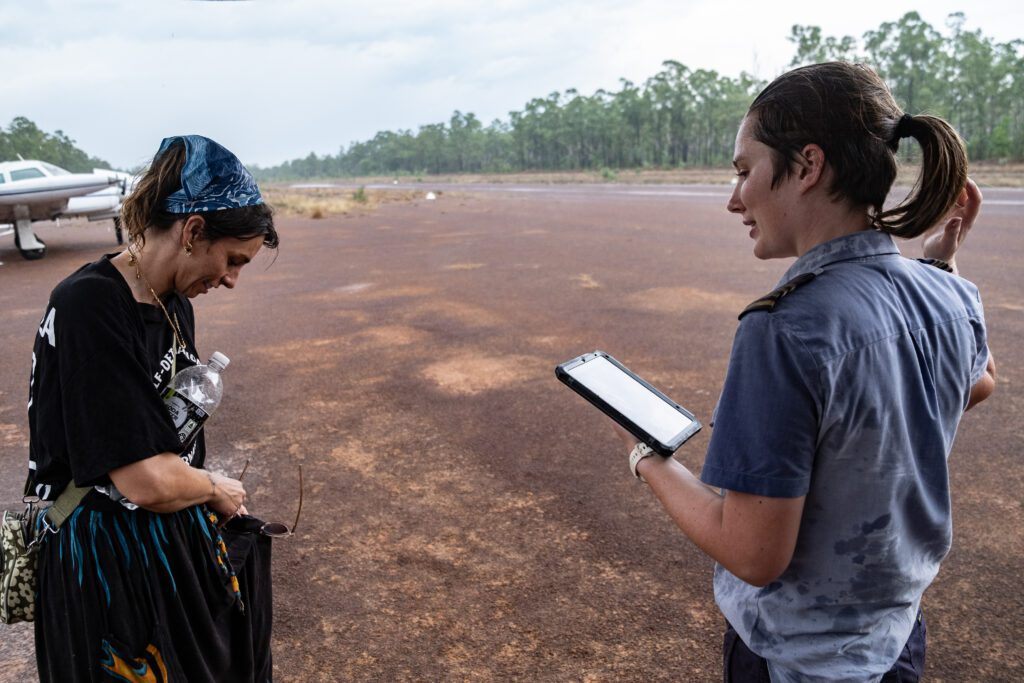
Drenched pilot Mel Higgins (R) at Gan Gan Homeland Airstrip (credit: Janne Rytkonen)

Please donate or continue to discover even more stories of how and where we are transforming lives around the world here.
Mission Aviation Fellowship (MAF) is the world’s largest humanitarian air operator. For over 80 years we have been flying light aircraft over jungles, mountains, swamps and deserts. We enable more than 1,500 aid, development and mission organisations to bring medical care, emergency relief and long-term development. Our pilots and personnel deliver relief workers, doctors, pastors, school books, food, medicines - everything that can only be safely and speedily delivered by air. Our faithful supporters give and pray to make this all possible.
© 2026 / MAF UK is a registered charity in England and Wales (1064598) and Scotland (SC039107)
