













No items in cart
Currently you don't have any items added to your cart. Select some items then come back here to complete your purchase.
Go to shop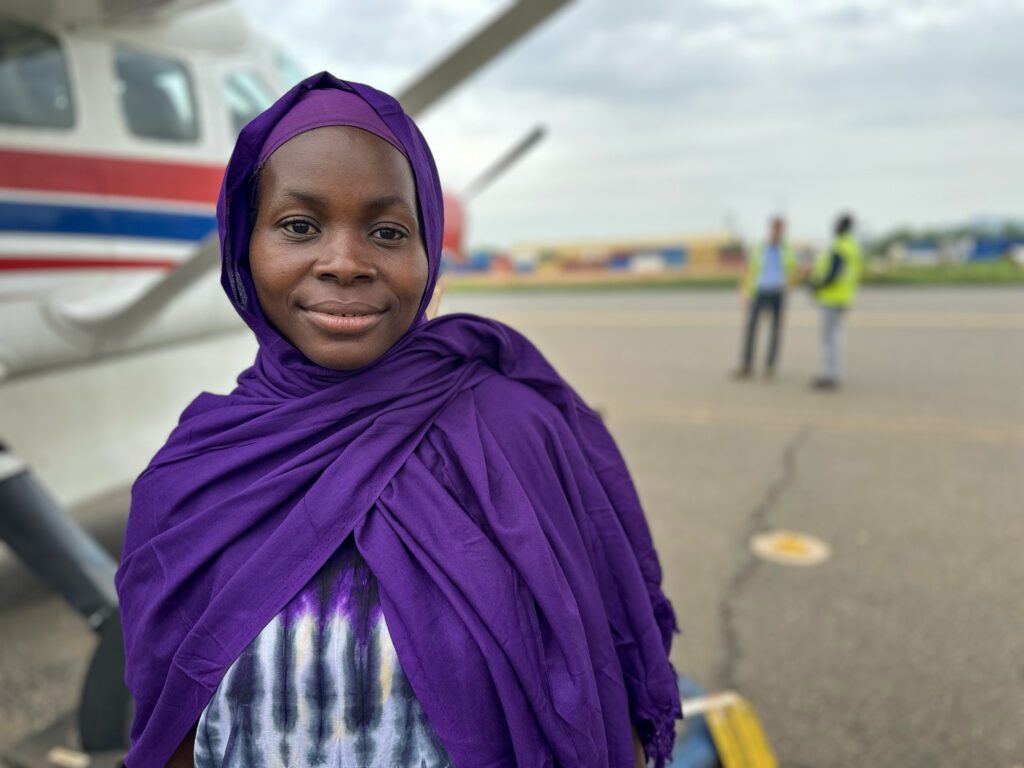
In Feb 2025, Lillian was flown by MAF to access surgery in Juba (credit: Jenny Davies)
An estimated 60,000 women live with fistula in South Sudan (source: UNFPA). This debilitating condition is caused by prolonged and complicated labour, which tears a hole between the birth canal and the bladder or rectum, leading to an uncontrollable leakage of urine and / or faeces.
The odds of fistula occurring is drastically reduced when a skilled midwife attends the birth. But for most expectant mothers in South Sudan, this is a luxury because the ratio is only 7.6 health workers to 10,000 people (source: UN).
If a fistula is left untreated, the pain and smell can lead to social isolation, stigma, shame, unemployment, and hardship. Many women live with this condition for decades.
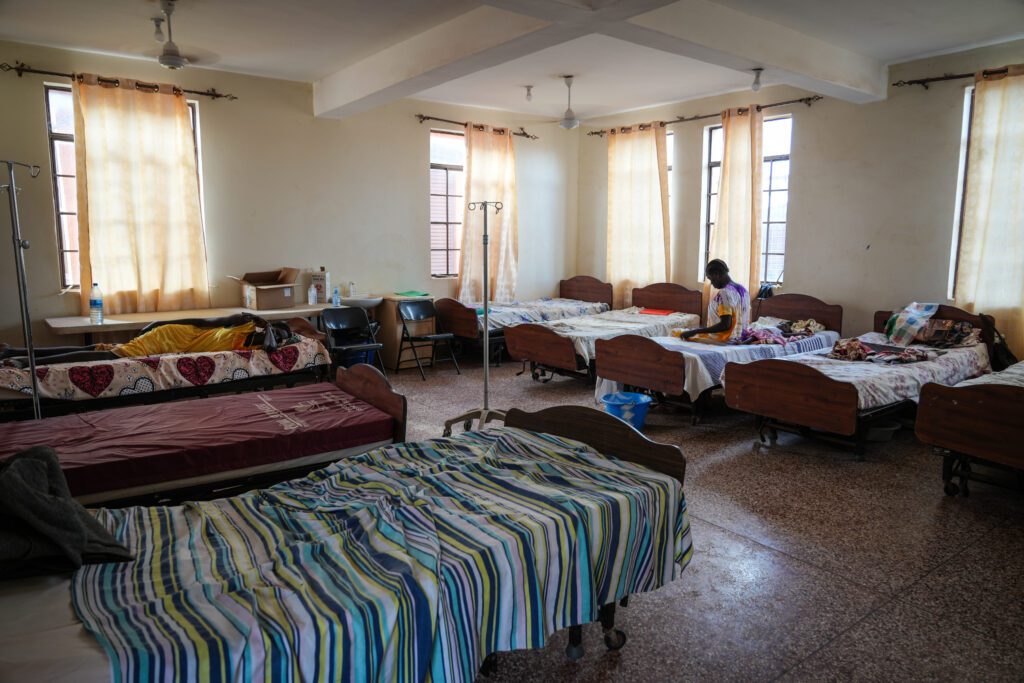
Reconciliation Hospital has been helping women since 2018 (credit: Matthew Schroeder)
Established in 2018, Reconciliation Hospital in the capital, Juba, is a ministry of the Evangelical Lutheran Church Africa Mission in South Sudan (ELCAMSS). Three times a year, specialist surgeon Dr Andrew Browning, treats around 40 women per outreach – repairing complex fistulas, often when previous operations have failed.
In partnership with ELCAMSS and medical charity AMREF, MAF flies isolated women from remote areas of South Sudan to Juba, giving them access to life-changing surgery they so desperately need.
After surgery, MAF flies them home. These swift, safe and smooth flights avoid hours of pothole-ridden roads where dangerous gangs roam.
Without MAF, remote women are left languishing in pain and shame, many hours or days away from adequate healthcare, which they cannot afford.
Ayor, Tensa, Nyanut, Elizabeth, Ayaar and Lillian share how MAF’s partnership with ELCAMSS’ Reconciliation Hospital and AMREF, has provided hope, comfort and security after so much trauma.
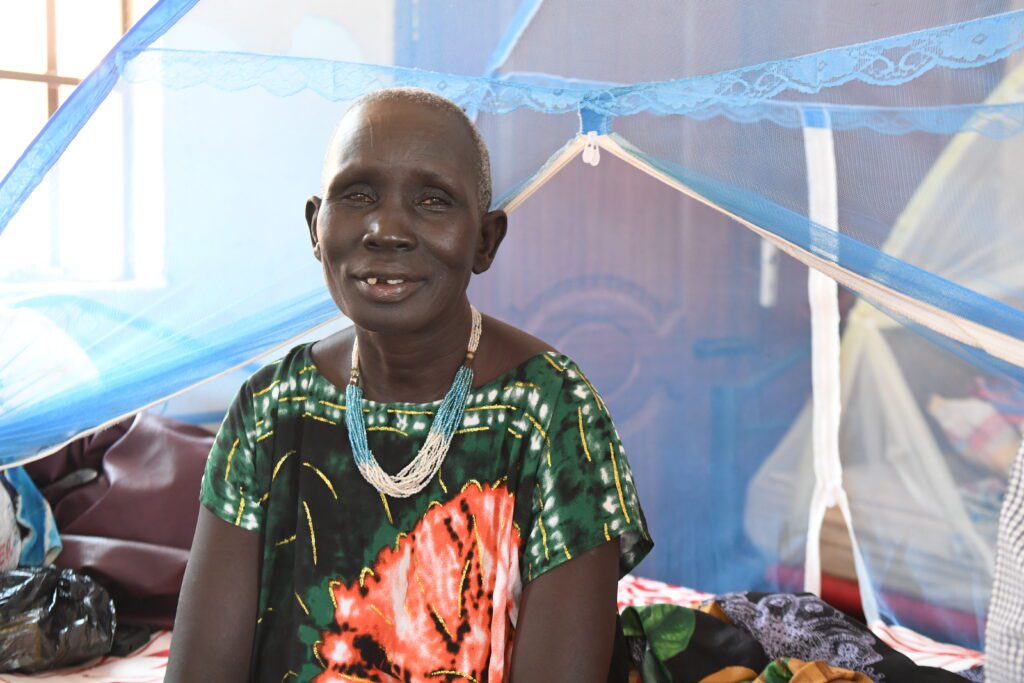
Ayor has been living with fistula for over 40 years (credit: Jenny Davies)
Mother-of-two, Ayor, lives in a village with no hospitals nearby in the region of Yirol. She has been living with fistula for more than four decades. The grandmother – now in her sixties – finally got the right surgery after a previously failed attempt. Ayor takes up her story:
‘The fistula followed the birth of my fourth child over forty years ago. I have been suffering with this condition ever since. My last baby died, and I was not able to conceive after that. I had a surgery before in Lokichoggio but it was not successful, and I wasn’t well.’
Last October, MAF flew Ayor to South Sudan’s capital, Juba, to try surgery again at Reconciliation Hospital.
‘I heard about the surgery from one of my relatives in the village. They told me they were doing operations in Juba, so I came to Yirol, and the MAF plane picked me up.’
Ayor is happy with her care:
‘I was operated on, and afterwards, the doctors came every morning to check on me. I am looking forward to being healed of the problem. They have made my life better now.’
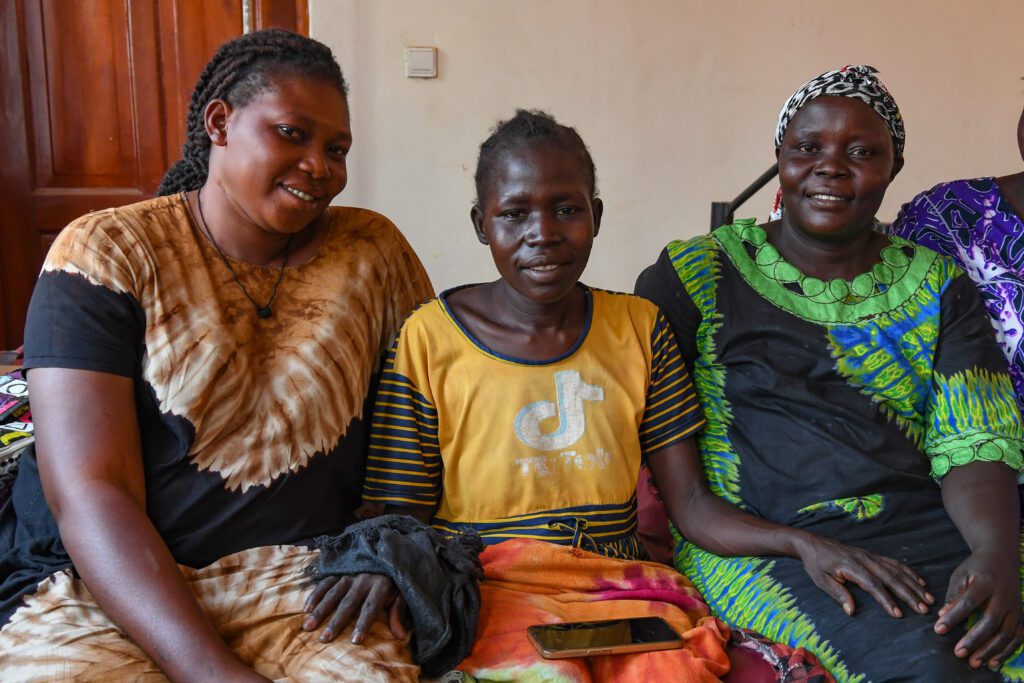
Tensa (centre) encourages other women: ‘Don’t be afraid!’ (credit: Jenny Davies)
31-year-old Tensa is from the Nuba Mountains in Sudan where healthcare is scarce. The mother-of-six developed a fistula during labour in October 2024. Tragically, her baby didn’t make it.
She finally had proper surgery to repair her fistula, four months after losing her baby. Tensa explains that she lives so far away from hospital, she had not choice but to attempt giving birth at home:
‘I stayed in labour for three days. The baby wanted to come out, but it was too big. When I tried to get up, my legs were paralysed – I couldn’t stand by myself.
‘We couldn’t get transport to the hospital and I couldn’t walk – I had to be carried. By the time we finally got a car and I was taken to hospital, my baby was already dead in my stomach.’
Tensa’s ordeal was far from over. After surgery and three days in hospital, the doctors began to notice a smell. They referred her to another hospital in Nuba for more advanced treatment. When they removed her catheter, Tensa noticed she had a serious problem:
‘There was a leakage – my urine started flowing uncontrollably, and my legs were still paralysed. Whenever I ate anything, I would vomit. I thought, “My body is finished – what am I going to do? What will happen to my children? Their father cannot take care of them without me!”’
Tensa was finally referred to Reconciliation Hospital in Juba. In February 2025, she was one of 43 patients – mostly flown by MAF – to receive fistula repair surgery during a medical outreach.
But the light at the end of the tunnel was overshadowed by another obstacle, sighs Tensa:
‘When surgery day approached, I started to feel chills at night. The medical staff tried to make me feel warm, but to no avail.
‘When the doctor touched me on the operating table, he found that my body was very hot. They postponed the operation and tested me for malaria and typhoid and found that I was suffering with typhoid.’
Once Tensa recovered from typhoid, she finally had surgery. Tensa is relieved:
‘The doctor treated me, and I am very happy. One of my legs is better and the other is still improving. Now I can move around with my walker instead of being carried like a small child. I thank God and the doctors. And I thank the people who brought me.’
Since her operation, Tensa’s mobility is improving and she’s swapped her walking frame for walking sticks.
‘I am so much better than before. This time, there is improvement and the problem is almost fixed. God willing, I will heal completely.’
Tensa encourages other women living with fistula to seek help:
‘Do not be afraid at all. The hospital will treat you – the doctors are good. You will be fixed, and then you can go back home happy to your children. This is my advice to people who are sick and afraid.’
Even before MAF flew Tensa from Yida in the far north of South Sudan to Juba in the south, she embarked on a harrowing car journey of up to 12 hours on potholed-ridden roads just to reach the airstrip.
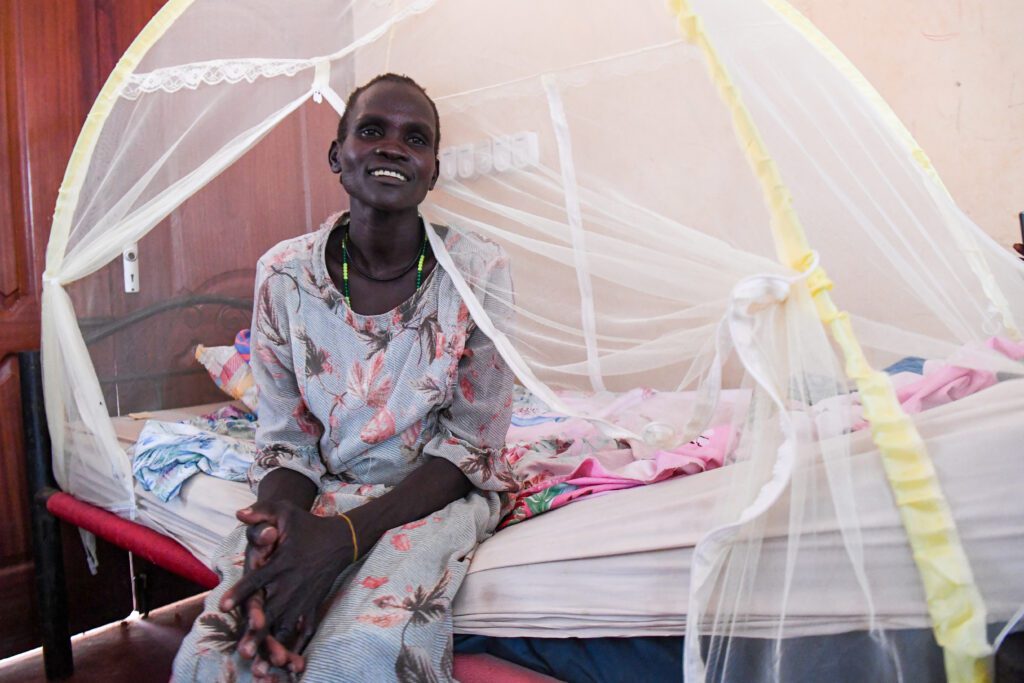
MAF’s flight saved Nyanut a three-day trek to hospital (credit: Jenny Davies)
Mother-of-three, Nyanut, is from Alek – an isolated village in the north-west of the country. She developed a fistula in 2019 during the birth of her twins. Tragically, one of them died during childbirth.
She finally received her first fistula surgery in October 2025, six years after childbirth. MAF flew Nyanut and dozens of other women to Juba in a bid to end their suffering. Nyanut takes up her story:
‘I delivered the first baby okay, but there were difficulties with delivering the second. They transferred me from the village to the local hospital, but they weren’t able to deliver the baby, so I was transferred again to the main hospital in town to remove the baby who had died. I have not been able to conceive again since that time six years ago.’
MAF’s safe and swift flight from her nearest town Kuajok, saves Nyanut a three-day trek. MAF is the preferable option, exclaims Nyanut:
‘I am from the village of Alek, which is far from Kwajok. When you walk, you sleep on the road because it takes more than one day. If you come on a boda boda (motorcycle), you will arrive that afternoon. It is better to fly with MAF, because the road is not good.’
Fortunately, the operation was a success, continues Nyanut:
‘I am in pain, but hopeful that things will get better. When I return to my community, I’m looking forward to going to church and socialising with the other ladies. I will go back to my everyday activities like farming. Things will be easier without this problem!’
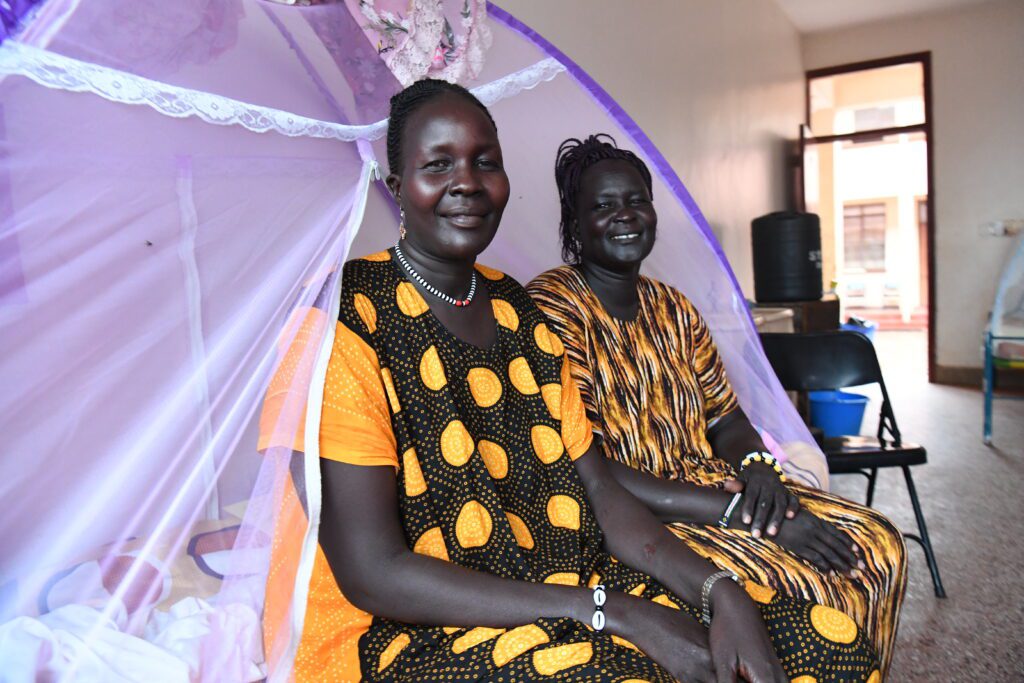
Elizabeth (L) & Ayaar (R) access surgery at Reconciliation Hospital (credit: Jenny Davies)
36-year-old Elizabeth is a pastor and mother-of-seven from Akot – a remote village in central South Sudan. Her last fistula surgery failed in 2022. Three years later – in October 2025 – her hope was restored when she heard that MAF would be flying women in need of fistula surgery to Juba.
Elizabeth is accompanied by her sister-in-law, Ayaar, who also needs fistula surgery. Ayaar’s problem began in 2021 when she was giving birth to her ninth child:
‘When I was in labour, my husband called the midwife, but before she arrived, the baby came out. He called one of our older children to help me deliver the baby. It was during this delivery that the fistula happened. My son isn’t a midwife and didn’t know how to help.’
Although obstetric fistula is taboo and rarely talked about in their community, the condition is common, explains Elizabeth:
‘Those women are many! On our way to the airstrip, we got calls from many other women who wanted to come! The problem is the stigma that’s attached to this condition. People will not tell you, even if they have it. They keep it secret.’
Elizabeth is grateful for MAF:
‘I am happy for the work that MAF is doing and that you have chosen to help people by providing planes. It would be hard for people to be transported by car. Sometimes people who try to reach Juba by car don’t make it.’
Although some women were keen to join them, others were very sceptical, sighs Elizabeth:
‘Some said, “Don’t go for an operation! You might catch another sickness at the hospital!” But I said that this hospital is from God and that I’m happy to be there. The staff are well trained and know what they’re doing. That’s why I accepted it. I am happy!
‘I am looking forward to going home on the MAF plane. We are thankful for the work that they do. May God always be with MAF so that you can provide such help to other South Sudanese.’
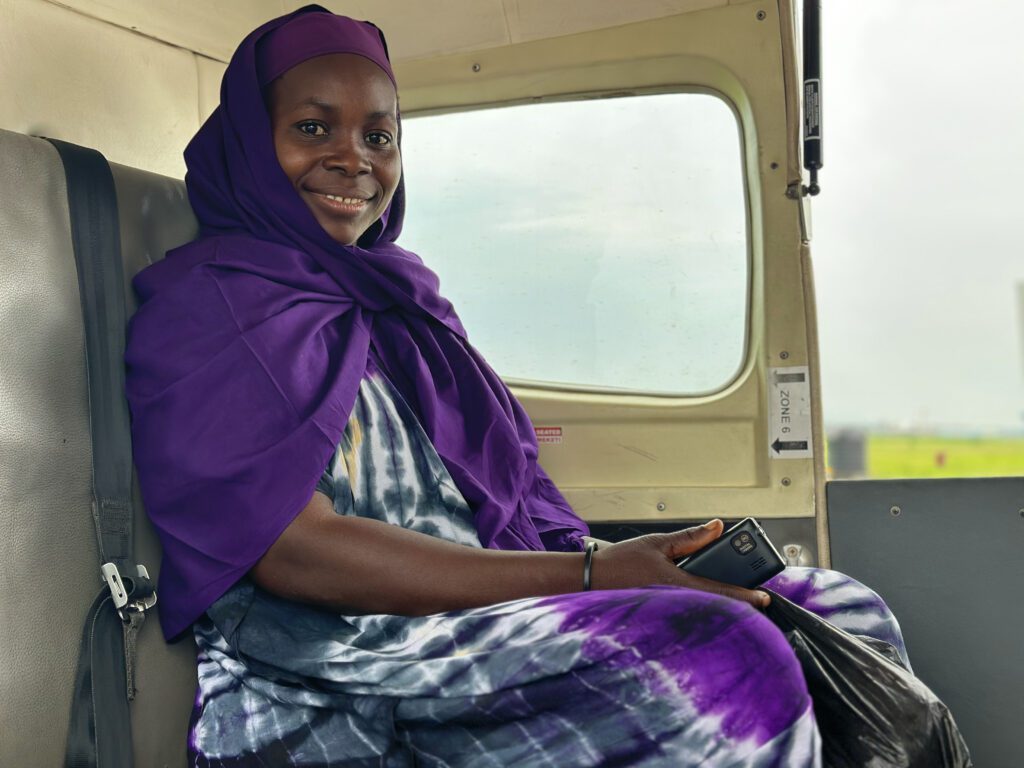
Lillian looks forward to a kinder future without ostracisation (credit: Jenny Davies)
38-year-old Lillian from Western Equatoria finally got surgery for fistula in February 2025 – a condition which she’s lived with since giving birth in her teens in 2003.
‘I got this fistula giving birth to my first child when I was 16 years old. I stayed for almost 18 months in hospital because they could not fix the problem.’
When she was finally able to leave the hospital, Lillian was forced to live alone due to being an orphan and stigma surrounding her condition:
‘My father died when I was young. When I had the first operation to fix the fistula, that was when my mother died.
‘I was with my husband for less than two years. I am unable to bring my fresh produce to market. I give my produce to others for them to sell it for me. I have been alone for the past 22 years.’
Since her surgery, Lillian looks forward to a brighter and kinder future:
‘When I was suffering, I could not move or be with people. In future, I hope I can be reunited with those people who abandoned and rejected me. I hope I will be able to enjoy good health.
‘Thank you to those who helped me to heal. The trauma and bad feelings are reducing because of the care I have received. I appreciate it very much.’

Please donate or continue to discover even more stories of how and where we are transforming lives around the world here.
Mission Aviation Fellowship (MAF) is the world’s largest humanitarian air operator. For over 80 years we have been flying light aircraft over jungles, mountains, swamps and deserts. We enable more than 1,500 aid, development and mission organisations to bring medical care, emergency relief and long-term development. Our pilots and personnel deliver relief workers, doctors, pastors, school books, food, medicines - everything that can only be safely and speedily delivered by air. Our faithful supporters give and pray to make this all possible.
© 2026 / MAF UK is a registered charity in England and Wales (1064598) and Scotland (SC039107)
