













No items in cart
Currently you don't have any items added to your cart. Select some items then come back here to complete your purchase.
Go to shop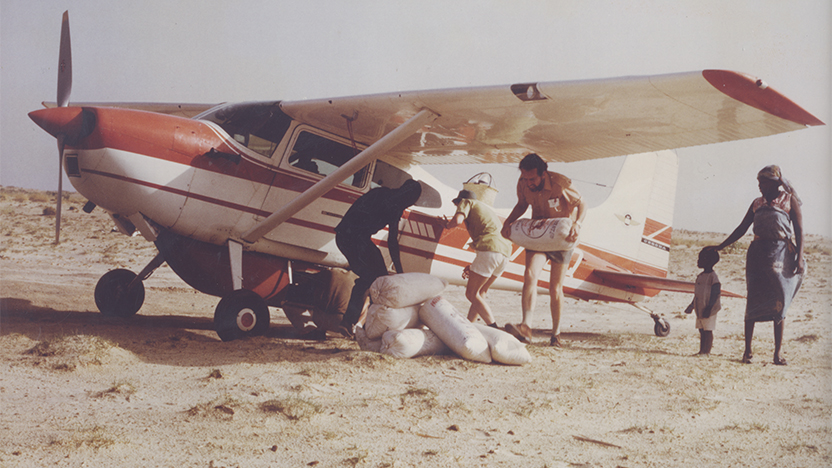
MAF co-founder, the late Stuart King, takes up the story in his book ‘Hope Has Wings‘:
Three thousand had already died since the meagre harvest of the previous year. Four hundred thousand tons of food were urgently needed.
The late Stuart King – MAF co-founder
‘One of the Cessnas was ready and we immediately flew it to Chad. We started a programme of ferrying food to Bébalém from places further south where it could be grown.
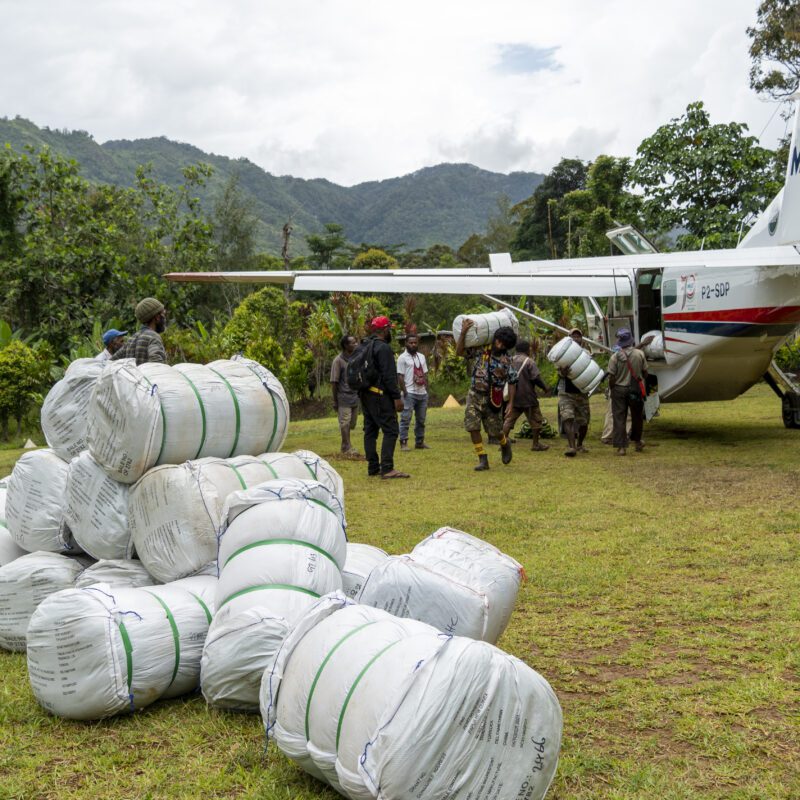
Other forms of transport were no longer feasible. Only planes could carry the grain over the dangerous bandit-ridden area.
Only small aircraft could deliver food aid and avoid roaming gangs (credit: MAF Archive)
At first Maurice Houriet and KeA Arnlund did all the flying. Then we were able to bring in other pilots, using the concept of a Mobile Task Force, consisting mainly of ex-MAF pilots who could give short periods of service in emergencies.
Over the following months, 18 pilots and engineers were at Bébalém involved in the relief programme. Though this put heavy demands on the permanent families looking after them, their help was essential.
Oxfam provided £60,000 for food. Further large gifts came from Tearfund and the Dutch inter-Church co-ordinating organisation. Our own MAF supporters gave £86,000 to help the desperate Chadian people.
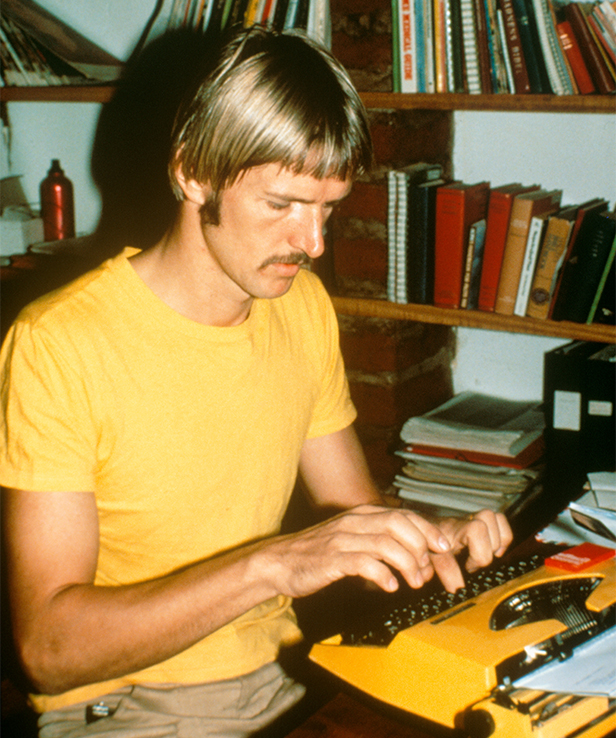
KeA Arnlund did most of the early flying for MAF in Chad (MAF Archive)
One of the mission houses at Bébalém was converted into a grain store and filled with tons of millet, rice, beans and wheat.
Chadians were kept fully occupied preparing sacks for distribution to 40 starving villages. A mission doctor supervised the project.
Parallel to the food distribution was a vaccination and health education programme designed to help the badly malnourished people.
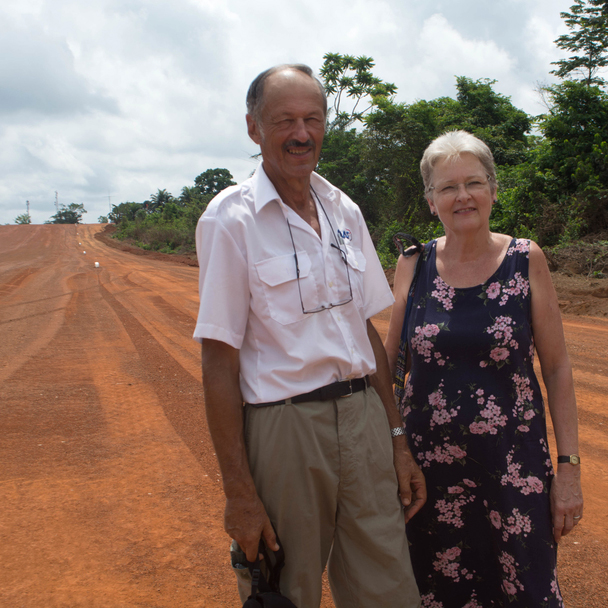
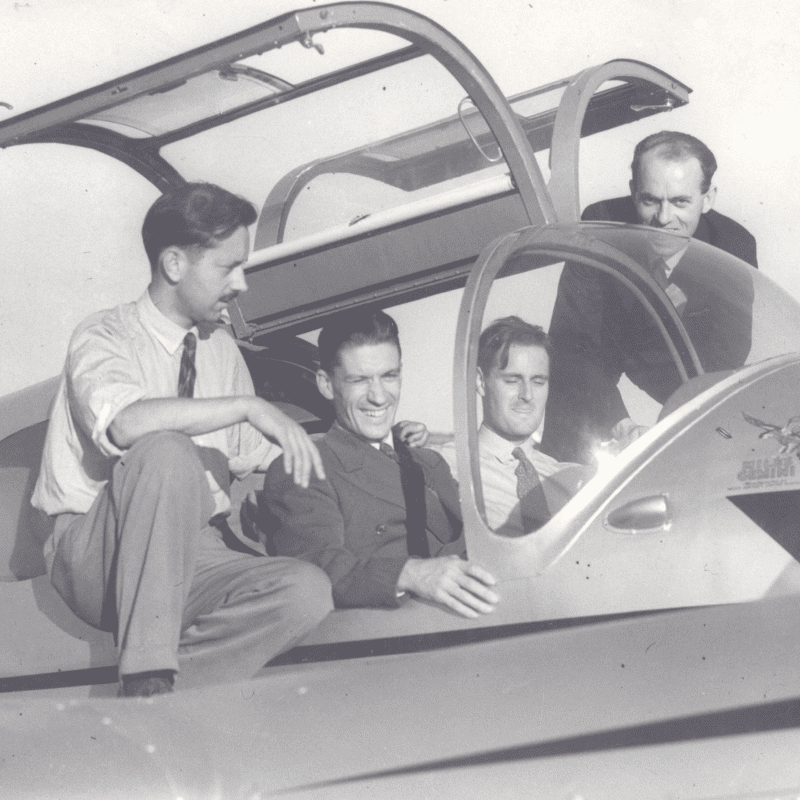
Maurice Houriet (left) was of the first MAF pilots in Chad (credit: MAF Archive)
The distribution of the food was administered by the Chadian Christians and local village pastors. They ensured that everyone received supplies. Fifty-five thousand were fed.
Because MAF was able to fly in grain, people were able to stay in their own villages. There was none of the usual displacement in search of food. Such displacement invariably causes further hardship, deprivation and loss of life.
‘It wasn’t a large operation by international standards, but every ton of grain reached its rightful destination. A visitor to the country commented, “You don’t have to ask what the Church is doing in Chad. It’s self-evident.”‘
The late Stuart King – MAF co-founder
The famine flying added more than 1,100 hours on top of the usual programme flying. Again the effort was worth it. Thousands of lives were saved. We heard that ten adults died during this period.
The concept of going into needy areas, sometimes at short notice, had now become part and parcel of our operations. Fast changing political, economic and environmental situations demanded it.
We’d use the idea of the mobile task force to supplement a programme’s resources and meet an emergency. The whole of MAF could, perhaps, be classed as a mobile task force.
I’ve sometimes thought that the initials should really stand for ‘Mobile Action Force’. Our work, our planning and our people have to have that mobility.’
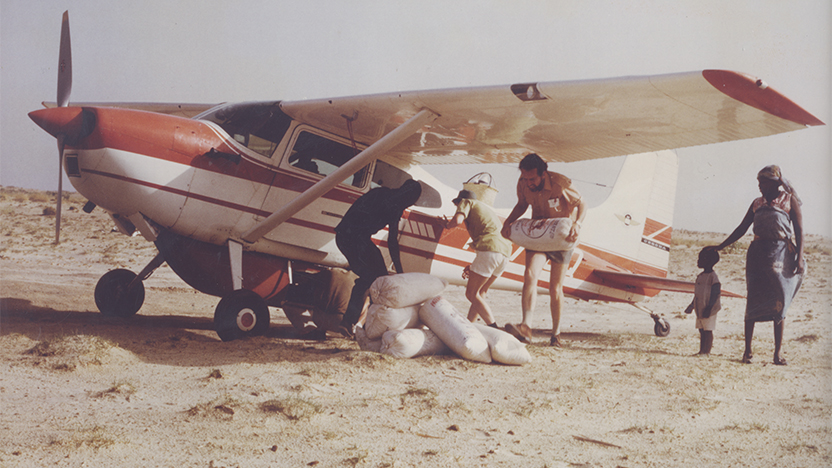
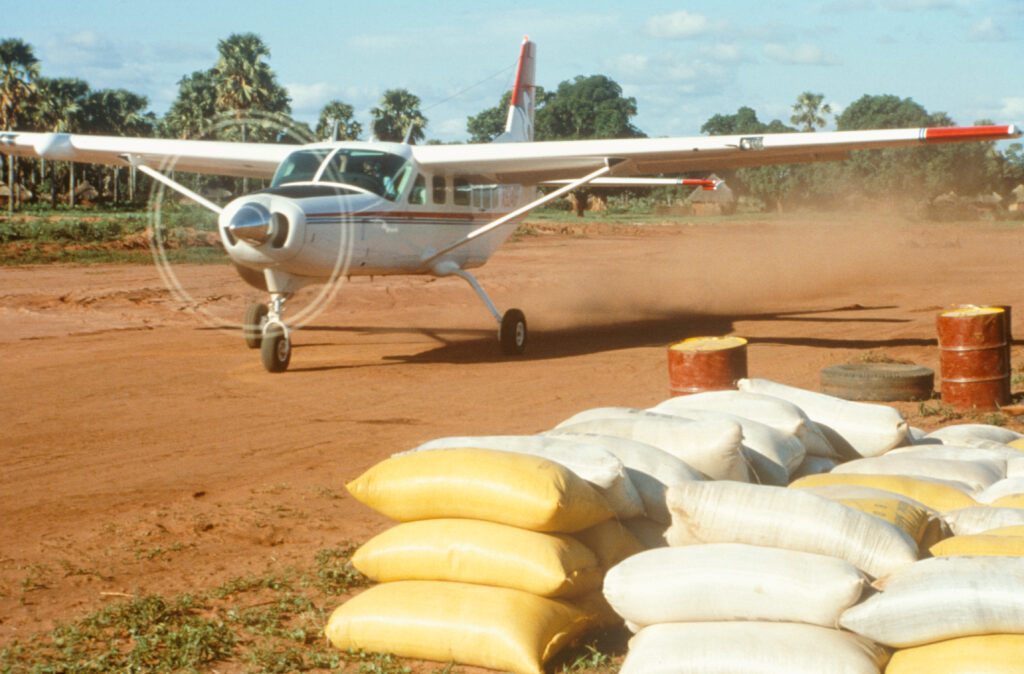
MAF delivered 2,460 tonnes of food, which fed 55,000 people (credit: MAF Archive)
Fortunately, late rains enabled some crops to survive in southern Chad. This meant that MAF was able to buy surplus grain from the area, which could be stored at Andoum near the Cameroonian border. The grain was readily distributed to people in need.
In the end, MAF delivered 2,460 tonnes of food aid to 32 bases around Bébalém. In addition to 55,000 people being fed, 1,600 children were vaccinated, which averted a measles epidemic.

Please donate or continue to discover even more stories of how and where we are transforming lives around the world here.
Mission Aviation Fellowship (MAF) is the world’s largest humanitarian air operator. For over 80 years we have been flying light aircraft over jungles, mountains, swamps and deserts. We enable more than 1,500 aid, development and mission organisations to bring medical care, emergency relief and long-term development. Our pilots and personnel deliver relief workers, doctors, pastors, school books, food, medicines - everything that can only be safely and speedily delivered by air. Our faithful supporters give and pray to make this all possible.
© 2026 / MAF UK is a registered charity in England and Wales (1064598) and Scotland (SC039107)
