












No items in cart
Currently you don't have any items added to your cart. Select some items then come back here to complete your purchase.
Go to shop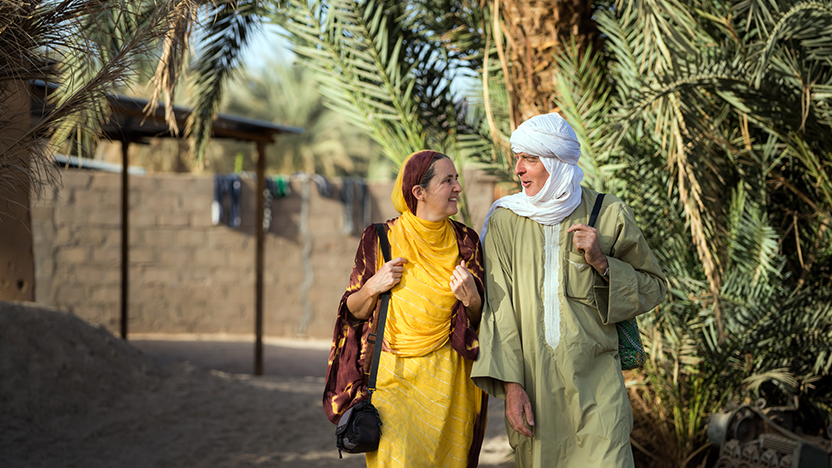
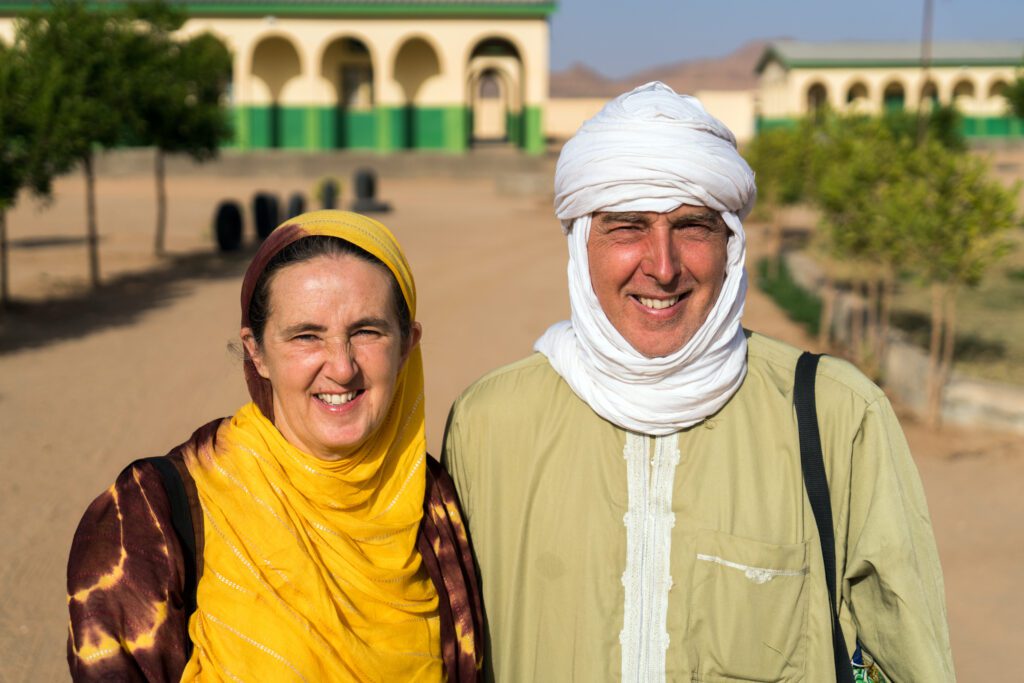
Mark & Andrea in front of Bardaï Hospital in northern Chad (credit: LuAnne Cadd)
Bardaï Hospital is a government-run health facility located in the mountainous Tibesti region near the Libyan border in the heart of the Sahara Desert.
It’s the only hospital in the entire province, serving a population of around 50,000 people and an additional 100,000 gold miners who have settled in the region over the past 15 years.
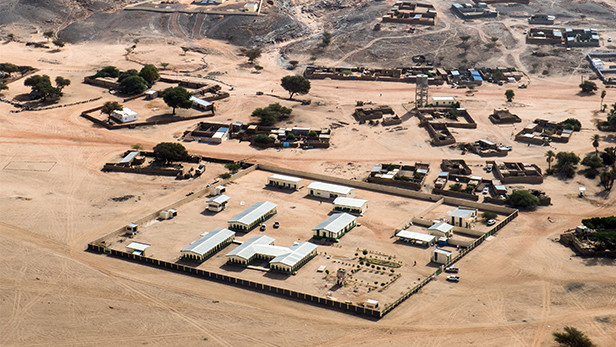
Aerial view of Bardaï Hospital (credit: LuAnne Cadd)
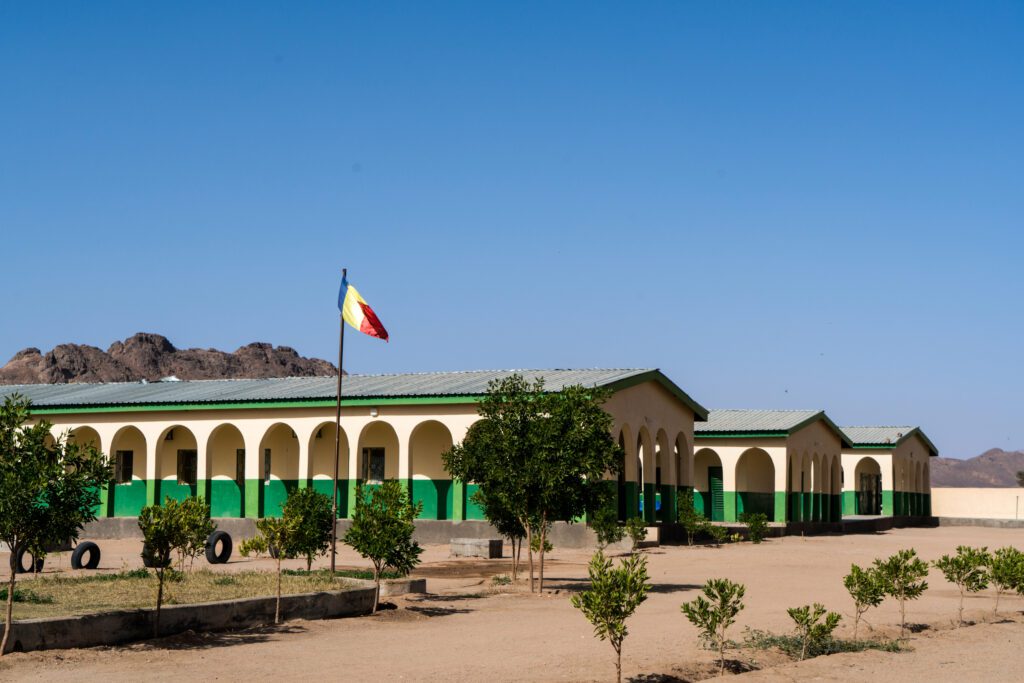
Bardaï Hospital was built in 2011 (credit: LuAnne Cadd)
The next hospital is some 500 miles away in Faya – a journey that takes two days over rough terrain or one hour by plane.
Bardaï Hospital was built in 2011, but after years of neglect and staff shortages, it was left empty for a long time. The operating theatres had never been used.
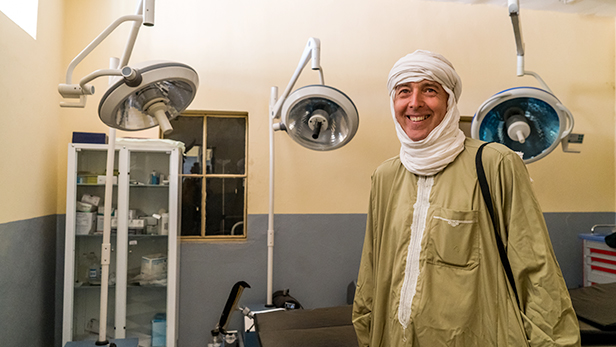
Mark in an operating theatre, which had never been used (credit: LuAnne Cadd)
Its isolated location failed to attract long-term staff, so healthcare for remote communities looked very bleak until British missionary couple – doctors Mark and Andrea Hotchkin – came along.
Andrea is an obstetrician / gynaecologist and Mark is a surgeon who initially began serving in Guinea in the early 90s with BMS World Mission.
In 2010, they moved to Chad where they set up Guinebor II Hospital in the capital N’Djamena, which they ran for six years before seeking a new challenge.
With the help of MAF in April 2016, they toured Bardaï Hospital, which according to Andrea, was ‘very, very quiet’ but had ‘a lot of potential’.
‘Everybody said we should go to Bardaï,’ says Andrea, so in February 2017, they moved to the Sahara Desert.
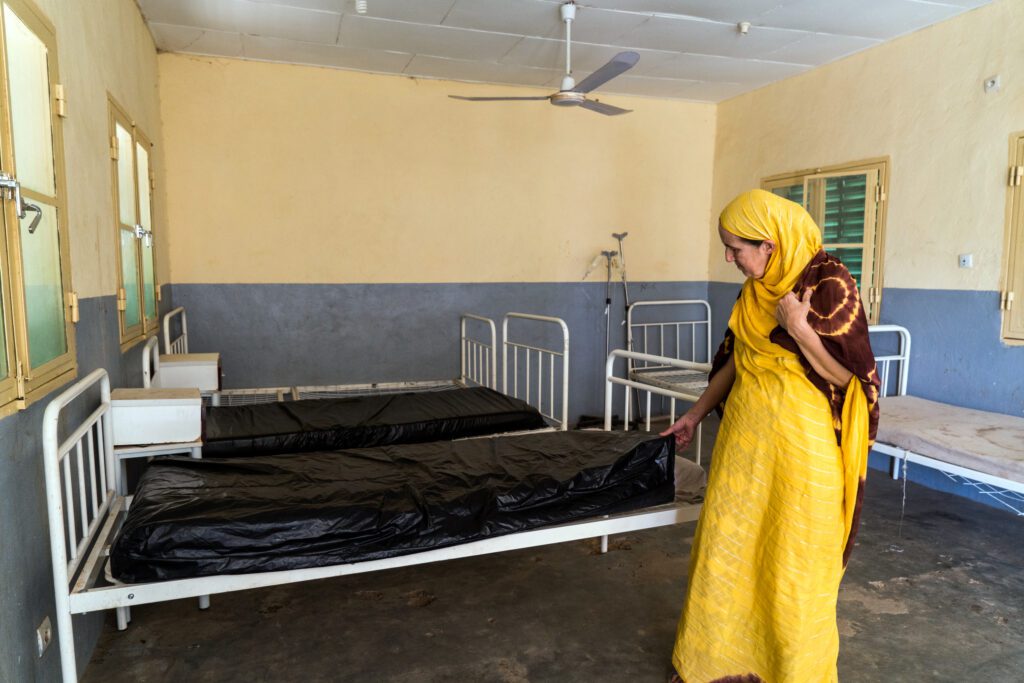
Andrea in one of the wards before the Hotchkins transformed them (credit: LuAnne Cadd)
For the first five months, the Hotchkins began learning the Teda language – a daunting endeavour, but one that paid off in building relationships. During this time, they set aside one day a week to work at the hospital.
The doctors began turning a dysfunctional space into something functional. They had a lot of equipment, but many interconnecting parts were missing, explains Andrea:
‘There was so much equipment, but nobody really knew how to use it. There were two operating blocks, but no one had ever operated. It was just a complete mess, so we made at least one of them functional.
‘Things were missing – there were a number of oxygen concentrators but no tubes to connect them to the patient. You can’t always get those things in Chad, so people have given us quite a lot of donations in the UK, which we brought back with us.’
Missing medical apparatus wasn’t ideal for a patient who had been shot in the chest, says Mark:
‘We had to improvise the chest drain using bits of plastic tubing and a urinary drainage bag. The patient survived, thankfully, but the ideal is to have a proper drain. Now I’ve brought up two chest drain bottles.’
By mid-November 2017, the doctors’ workload had increased – 35 in-patients, 22 surgeries, and 27 dental patients. Unfortunately, frequent stabbings and shootings over gold mining continue to keep the hospital busy.
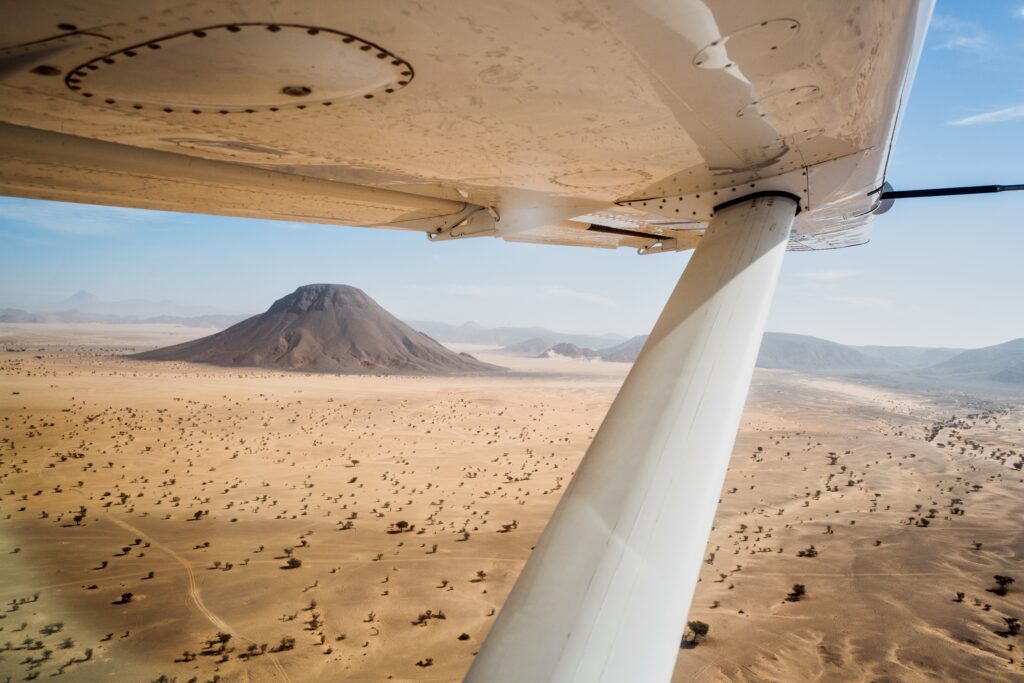
N’Djamena to Bardaï is MAF’s longest route in Chad (credit: LuAnne Cadd)
MAF’s flight over the Sahara Desert from N’Djamena to Bardaï, via Faya, takes six hours. It’s MAF’s longest route in Chad.
At first, the Hotchkins drove to Bardaï from the capital to see what an overland trip through the desert would be like.
It took three 14-hour days with little legroom! At times, they could walk faster than the car, especially through the mountains.
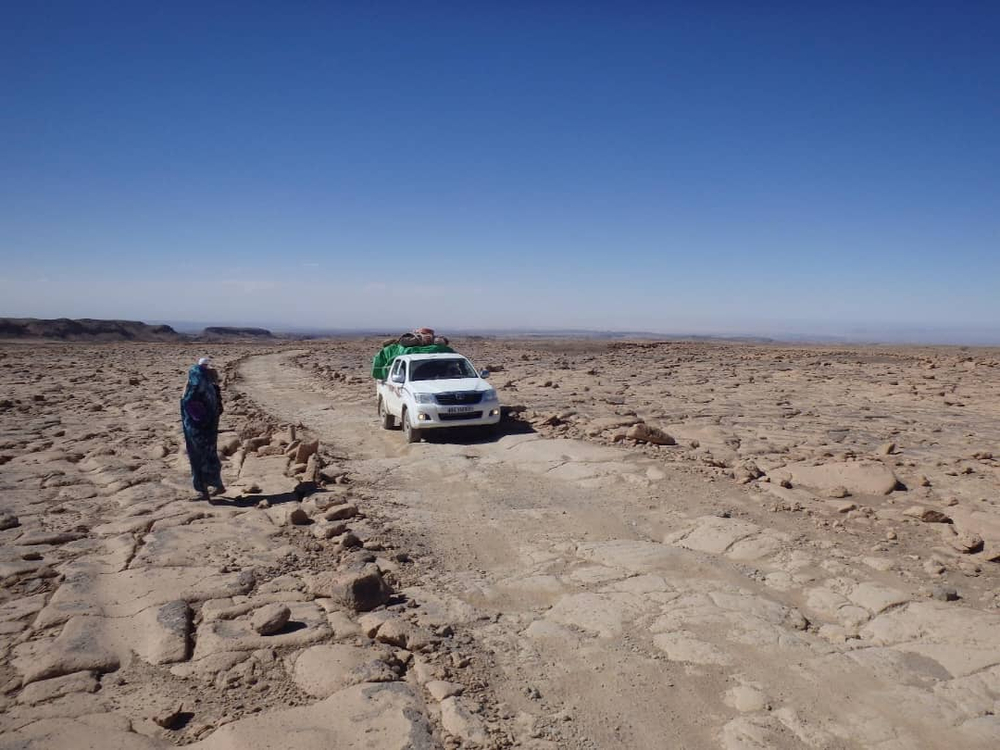
A desert road trip risks breakdown, robbery, kidnap or dehydration (credit: Mark Hotchkin)
An overland journey also risks a breakdown in extreme heat, robbery or even kidnap by rogue gangs, so the Hotchkins came to rely on MAF for safer as well as swifter travel, says Andrea:
‘Having MAF around just makes a huge difference because you can come up in one day. Otherwise, you’ve got to travel three days minimum across the desert. It’s fun but not easy and it’s dangerous.
‘Living in quite an isolated place like this, it’s nice to know that you can have a break every five or six months, but that would be more difficult if it was a land trip every time.’
Andrea Hotchkin, BMS World Mission obstetrician & MAF frequent flyer
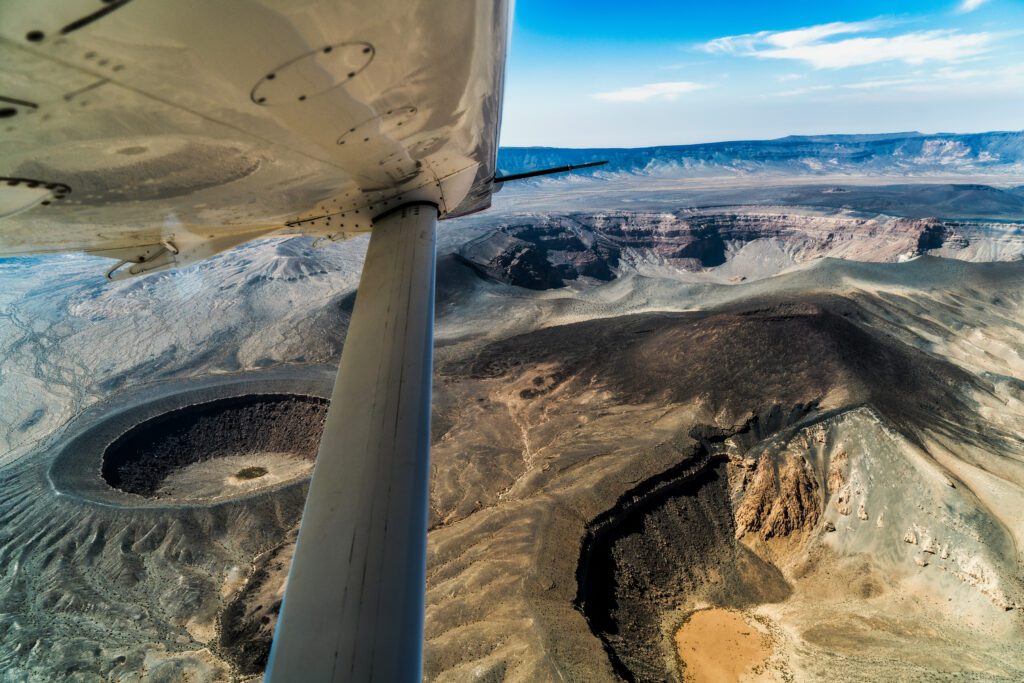
Aerial views of the Tibesti Mountains are ‘quite spectacular’ (credit: LuAnne Cadd)
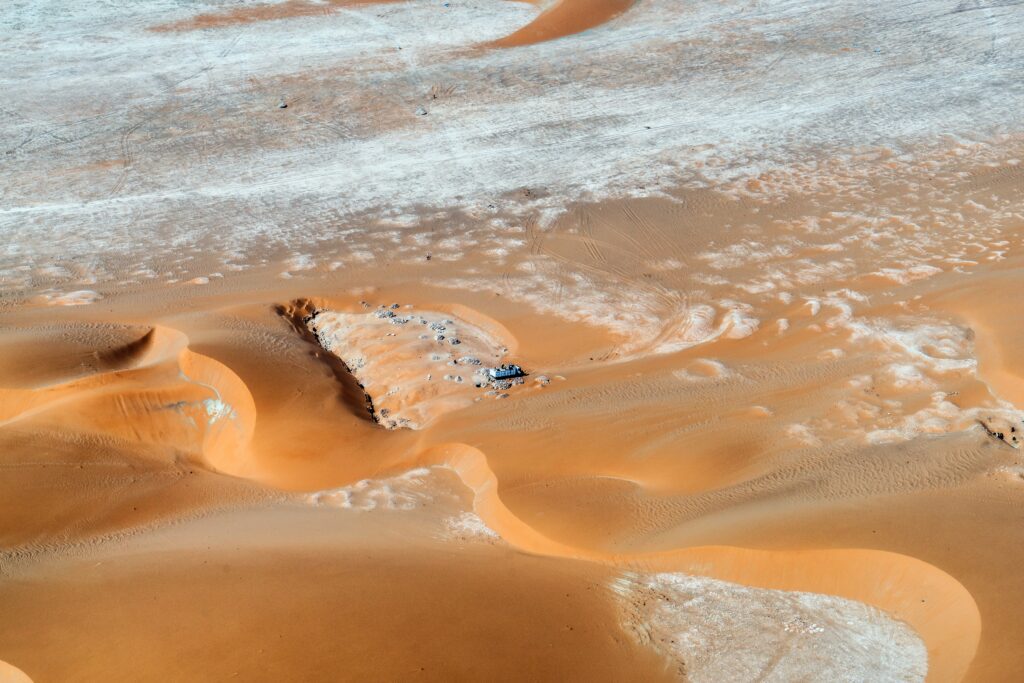
The sand dunes from the plane look ‘amazing,’ says Mark (credit: LuAnne Cadd)
The aerial views are stunning, exclaims Mark:
‘The flight in itself is quite spectacular, with amazing views of the sand dunes in the Sahara to the highest point of the Tibesti Mountains.’
The last day of travel includes a very slow 20-minute drive from the airstrip to Bardaï Village, explains Mark:
‘The car climbs through the mountains at about 12 miles an hour, often at walking pace.’
In addition to drastically reducing the Hotchkins’ travel time, MAF also flies essential lifesaving drugs. Without temperature-controlled flights, they would spoil, says Mark:
‘Without a MAF flight, in the burning heat of the desert, the drugs meant for the hospital would likely arrive in bad condition if MAF wasn’t in the picture.’
Mark Hotchkin, BMS World Mission surgeon & MAF frequent flyer
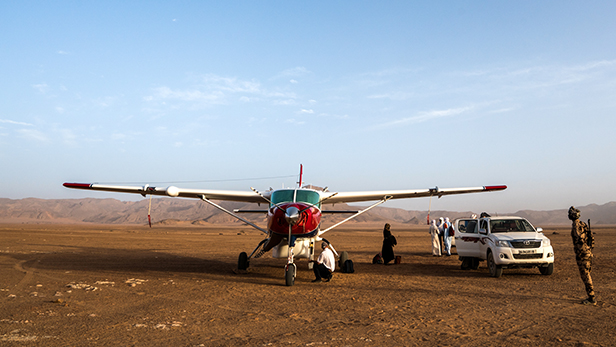
MAF saves up to 5 days overland travel through the Sahara Desert (credit: LuAnne Cadd)
Medical supplies and equipment like IV fluids, tubes, crutches, and sterilisation machines are also vital and need to be flown in. Simple items like crutches are critical, says Andrea:
‘They’re used for patients who need to mobilise after surgery – people with gunshot wounds, broken bones in plaster, those who have severe leg infections, or for patients who’ve had skin grafts for large wounds.
‘When patients are mobile, they can look after themselves and don’t develop the consequences of staying in bed like blood clots, bed sores, or muscle contractures. They also feel better in themselves if they’re up and about.
‘If we didn’t have crutches, patients would need wheelchairs, or rely on others to support them as they walk. Often people are far from their family and take a long time to get better, so this would be difficult.’
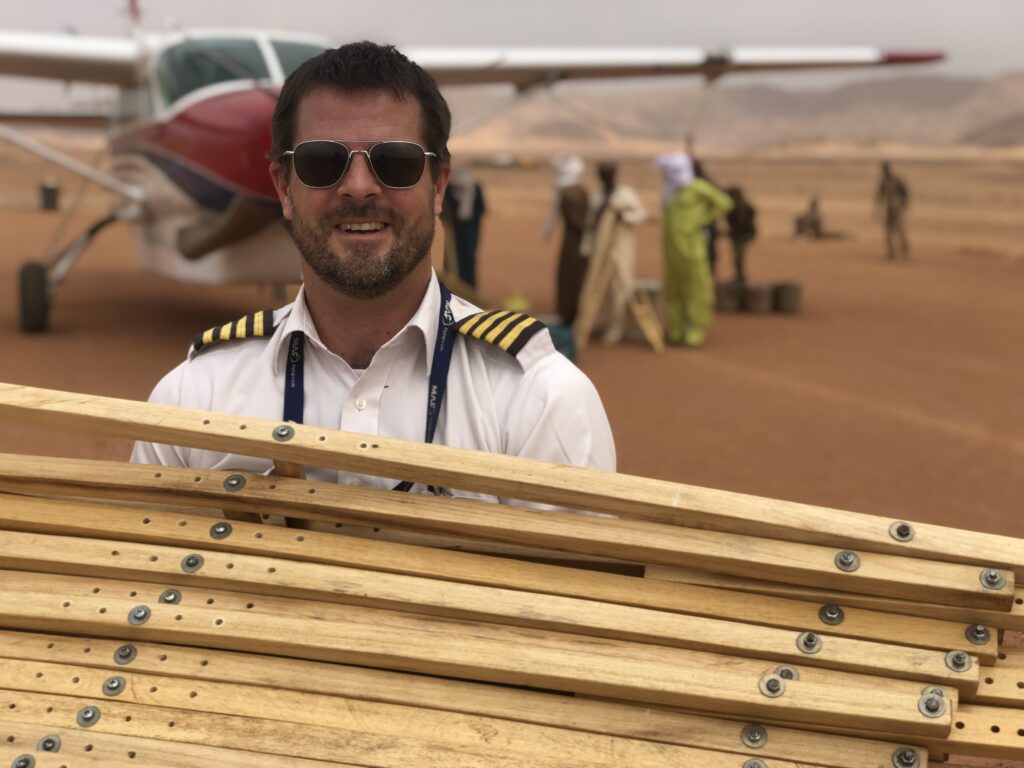
MAF pilot Phil Henderson flies crutches to Bardaï (credit: Mark Ortman)
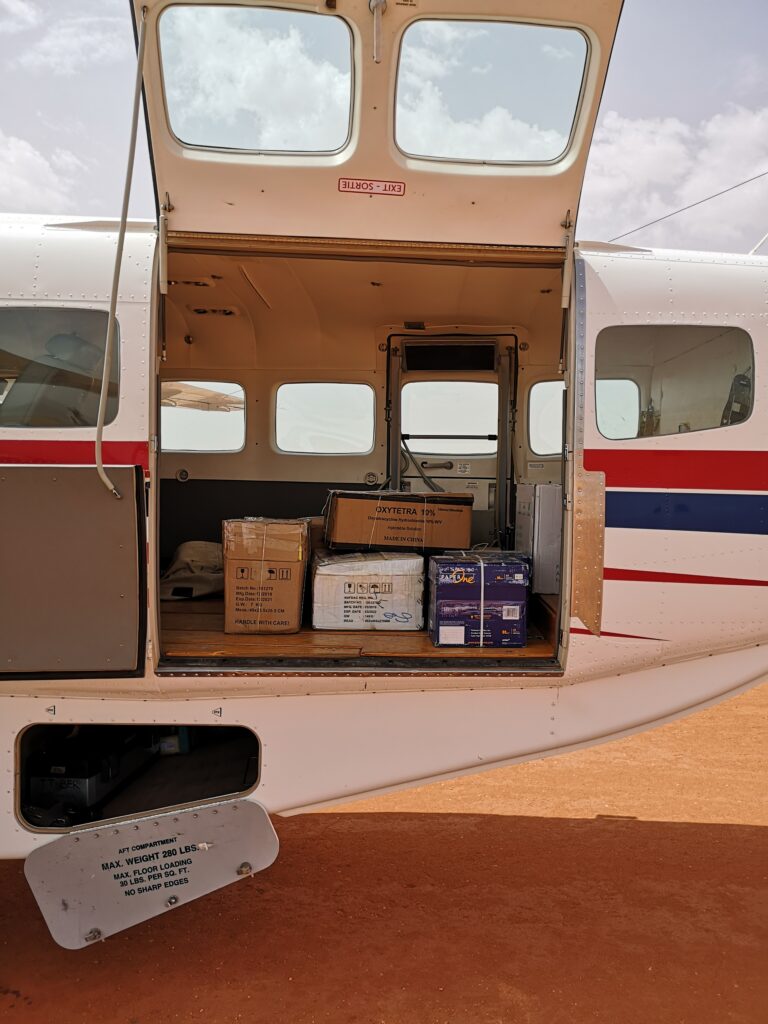
Bardaï Hospital relies on MAF for critical supplies (credit: Timothy Webb)
MAF has flown specialists to Bardaï to fix hospital equipment such as X-ray engineers and lab technicians. Blood samples from the hospital have also been flown to the capital by MAF for analysis.
Besides undertaking caesarean sections and performing surgery on gunshot victims, their work now includes training others, says Mark:
‘We work with Chadian doctors and nurses to deliver care, but also train people so that standards can be improved.
‘It’s difficult for staff to come from the south of Chad to the north to work. Many who are sent, simply don’t come.’
But, according to Mark, the skills of those who choose to stay at Bardaï Hospital have vastly improved under the couple’s guidance like its director, Dr Abdelkerim:
‘We’ve been really encouraged that Dr Abdelkerim – who has been working with me learning some surgery over the years – has actually managed to start operating by himself. He’s had some great results, so that’s been a source of encouragement.’
But still, the workers are few and the need is great. Mark continues to pray for other Chadian health workers to join their team in the extreme north:
‘If one day they could fly like we do with MAF, that would be a great thing.’
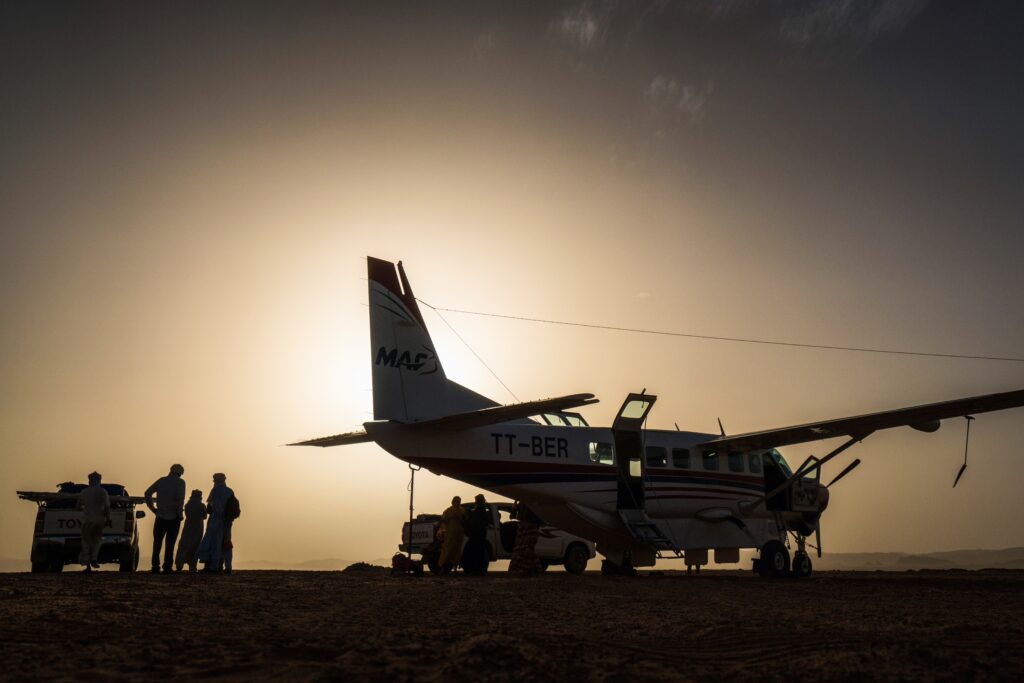
The sun sets over Bardaï after another day of flying (credit: LuAnne Cadd)

Please donate or continue to discover even more stories of how and where we are transforming lives around the world here.
Mission Aviation Fellowship (MAF) is the world’s largest humanitarian air operator. For over 80 years we have been flying light aircraft over jungles, mountains, swamps and deserts. We enable more than 1,500 aid, development and mission organisations to bring medical care, emergency relief and long-term development. Our pilots and personnel deliver relief workers, doctors, pastors, school books, food, medicines - everything that can only be safely and speedily delivered by air. Our faithful supporters give and pray to make this all possible.
© 2026 / MAF UK is a registered charity in England and Wales (1064598) and Scotland (SC039107)
